
We humans typically spend less time in our gardens during the winter months, so it can be easy to forget about the plants that live there. However, our trees, shrubs, and perennials are very alive and active during the winter.
So, what is your garden doing in the winter months, and what can you do to support plant health? Here are some answers to Frequently Asked Questions about plants and planting in winter.
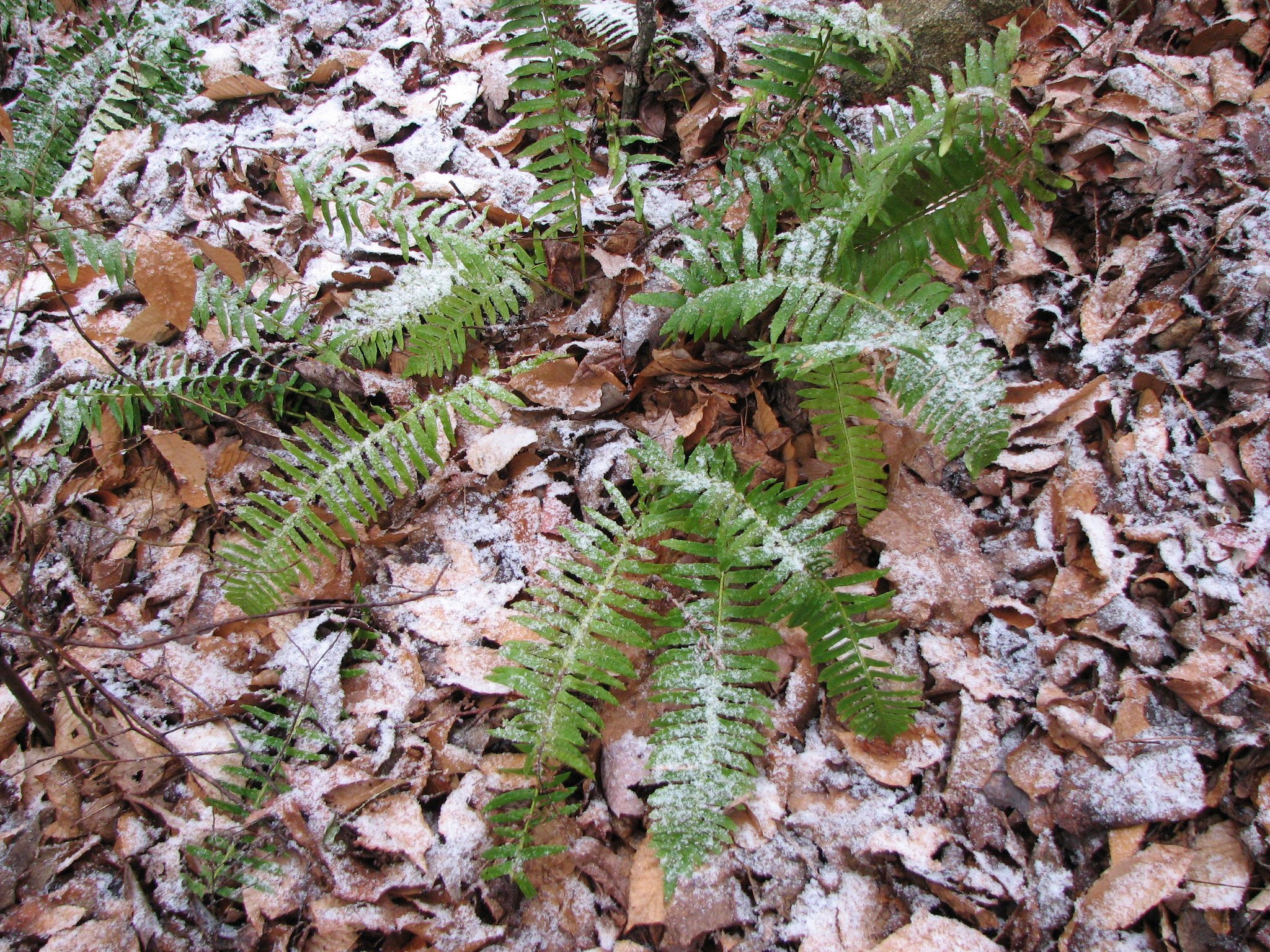
A native fern provides a pop of green in the winter garden.
Ideally, when is the best time to plant?
All things being equal, fall is our preferred planting time. The lower temperatures make the transition from the nursery to your yard much less stressful for trees and shrubs, as compared to the middle of the summer.
Plus, those plants will have the entire winter to focus on root growth, and they will hit the next season with a lot of forward momentum. Winter planting offers this same benefit as well.
Can trees and shrubs be planted in the winter? Is it good for them?
As long as the ground is not frozen, trees and shrubs can be planted at any time of year. Because the soil is not exposed to air temperatures and is often insulated by mulch and/or snow, soil temperatures are often significantly warmer than air temperatures.
A large portion of a plant’s root growth occurs throughout the fall and winter, whereas it focuses energy on foliage growth during the growing season. This means trees and shrubs planted in winter will prioritize establishing their roots and will be better prepared for the growing season when it comes around in the spring.
Is plant maintenance different for a garden that’s installed in the winter?
Even though they are most likely dormant, newly installed plants still need water when planted in the winter. Plan to “water in” new plantings just as you would at any other time of the year, and offer occasional supplemental watering over the next few weeks.
A bonus of winter watering is that saturated soils maintain a higher temperature on average than dry soils, which can help prevent frost heaving and root damage.
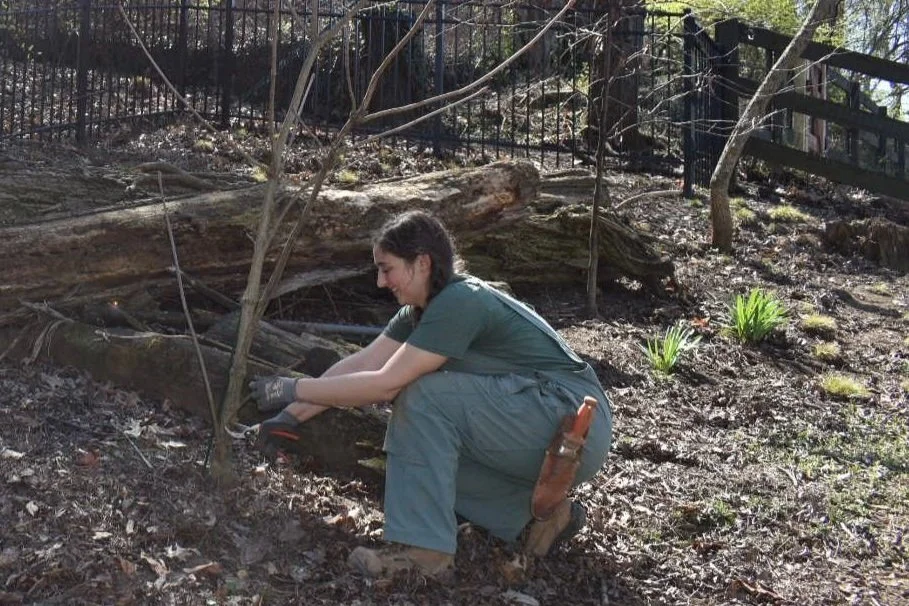
The winter months are a great time to conduct structural pruning. Because deciduous trees have dropped their leaves, it’s easier to see crossed and broken branches. Here, an Our Land Organics team member prunes woody shrubs.
How will I know if my plants are healthy in the winter?
Since many plants drop their leaves in the winter, plant health can be difficult to ascertain. There are a couple things we can do, though, to check on our plants in the winter.
For young trees and shrubs, we can check for die-back by conducting a scratch test. Lightly scratch off a small section of bark with your thumbnail to reveal the layer beneath. If that layer is green, then the plant is alive in that particular area; if the under-layer is brown, that section of the plant has died.
Winter also is a great time to inspect the structure of trees and shrubs, because the leaves are out of the way. If you see any broken or rubbing branches, it’s a good idea to conduct some structural pruning. With a few exceptions, most plants can be pruned in winter without health risks. Learn more about winter pruning do’s and don'ts in our blog post.

The Our Land Organics team builds and restores landscapes all year round.
Is winter a good time for working in the garden?
While we work in gardens all year long, there are certain tasks we prefer to perform during winter months. For example, removing invasive Bush Honeysuckle is a great winter task. It is easily identified by its bark, and winter removal means our crews don’t have to contend with poison ivy or potential seed-spreading during removal.
Also, as noted above, winter is a great time for structural pruning of trees and shrubs. There is no other time when the woody architecture of your trees and shrubs is more visible, so we love to prune crossing and broken branches during this time.
What does it mean for a plant to be dormant?
When a plant enters dormancy, it curtails growth and minimizes functions not necessary for its survival.
For deciduous leafy perennials, this means dropping leaves or dying back to the ground. For evergreens, this means temporarily halting new growth. These tactics make most efficient use of the minimal light and moisture resources available during winter.
Dormancy is an important part of a plant’s growth cycle. While a plant can sometimes be manipulated to skip its dormant phase, such manipulation is usually detrimental to the plant’s health.
Are plants at risk for damage during the winter? What can be done to minimize damage?
Heavy accumulations of snow and ice can break branches off trees and shrubs. Also, due to a lack of available food in other environments, deer, rabbits, and other foraging animals can pressure plants during winter months.
To minimize foraging damage, we recommend installing tree guards around the trunks of young trees and installing deer fencing around any new shrub or perennial. While any plant can become damaged due to wildlife foraging, it’s really only the young, not-yet-established plants that are at risk of serious injury—so we recommend prioritizing their protection.
Also, cracks in drier soils can allow for quicker and more severe cold infiltration, which can ultimately lead to root damage. It is important to keep garden beds mulched, because mulch can provide an insulating layer, keeping soil temperatures more stable.
To prevent evergreens from experiencing winter damage, you can install temporary burlap wraps or wind screens. In addition to decreased temperatures, winter can hit plants with severe wind speeds, resulting in damage.
Lastly, plants still need to be watered in the winter, and many property owners are less active in their yard during these months. That can create an “out of sight, out of mind” effect, causing plants to be neglected. This is a particular risk for young, not-yet-established plants.
Staying attuned to your garden throughout the cold months (or investing in year-round landscape maintenance) will help sustain plant health all year long.
Resources: