How to Attract More Birds to Your Yard
Love birds? So do we.
Birds are vital members of our ecosystems. Among other benefits, they distribute seeds and helpful fungi, provide fertilizer for soils, help maintain forest health, and act as natural pest management professionals. Plants, other wildlife, and humans all benefit from these services.
Simply watching birds offers additional benefits. Connecting with nature in this way can improve mental health and reduce stress, which in turn boosts physical health. Plus, spotting different species of birds in your backyard is simply exciting, beautiful, and fun!
No matter your reason for desiring more birds in your landscape, here are five strategies that are all but guaranteed to attract more birds to your yard at any time of year.
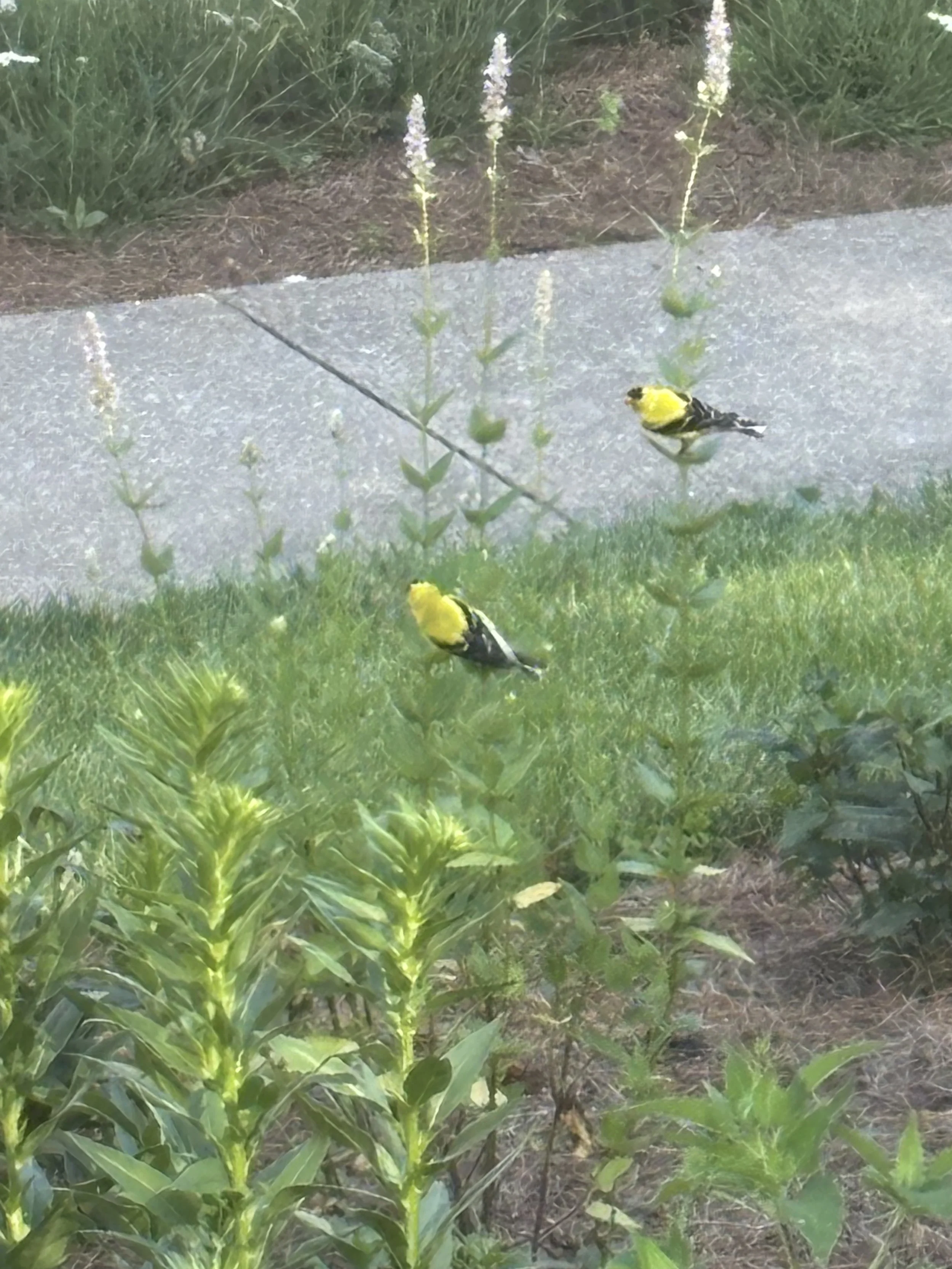
Two goldfinches enjoy a snack and some respite in an Our Land Organics client’s landscape
Plant native trees, shrubs, and perennials.
The absolute best way to attract birds to your yard is to create their ideal habitat using native plants.
Birds that are native to this region (and those that consistently migrate through the region) have co-evolved with native plants for millennia. They rely on these plants for shelter and—most importantly—food. Native plants provide ideal nutrition for birds in the form of insects (who also rely on native plants for food and shelter), fruits, nuts and seeds, and nectar.
Different bird species need different types of food. This means it’s ideal to plant a diversity of native plants that make sense for your site, taking into account factors such as light conditions, soil type, and soil moisture.
In the overstory tree layer, native oaks, birches, maples, and cherry trees provide exceptional habitat for insects and the birds who rely on them for sustenance. Native understory trees and shrubs including serviceberries, dogwoods, spicebush, sweetspire, chokeberry, elderberry, winterberry, and viburnums are also great choices for birds.
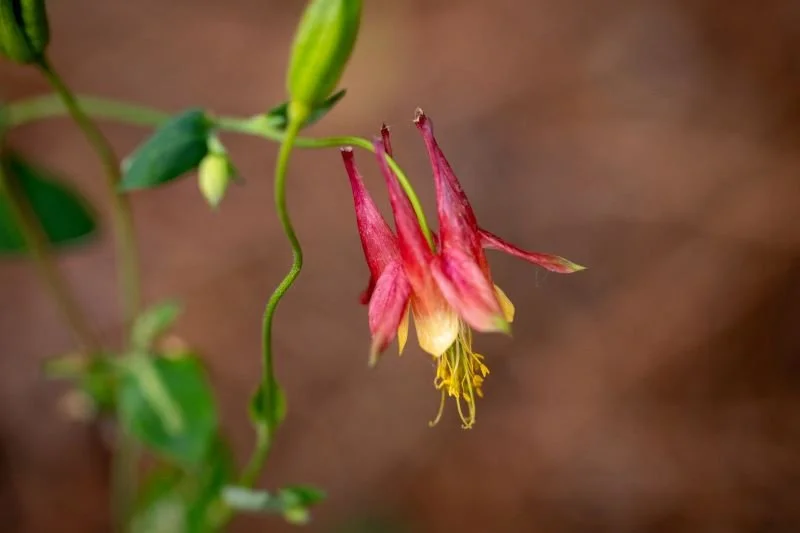
Native columbine attracts and provides nectar for hummingbirds
When it comes to native perennials, there are abundant options. Goldenrod, milkweed, coneflowers, asters, mountain mints, and Joe Pye weed all attract a large variety of insects, who in turn provide food for birds. If you’re trying to attract hummingbirds, plant native tubular flowers such as columbine, penstemon, and coral honeysuckle.
When building habitat for birds, aim to install as many “layers” of native plants as possible (trees, shrubs, and herbaceous perennials). Cluster plants in groups of at least five or more of the same species, and aim to provide continuous blooms throughout the spring, summer, and fall to maximize food sources.
If you’d like support with creating a bird-friendly yard, our native landscape design services can help you identify the right plants for your landscape and for the bird species you hope to attract.
Let leaves and sticks lie.
Decaying leaves, branches, and other natural detritus create excellent habitat for many insects (who, again, provide a stellar food source for birds). Fallen leaves can also be incorporated into birds’ nests.
Consider creating a brush pile in a corner of your yard and allow at least some fallen leaves to stay in your landscape each fall, perhaps by raking them into garden beds. Learn more tips for ecologically friendly ways to manage fallen leaves on the blog.
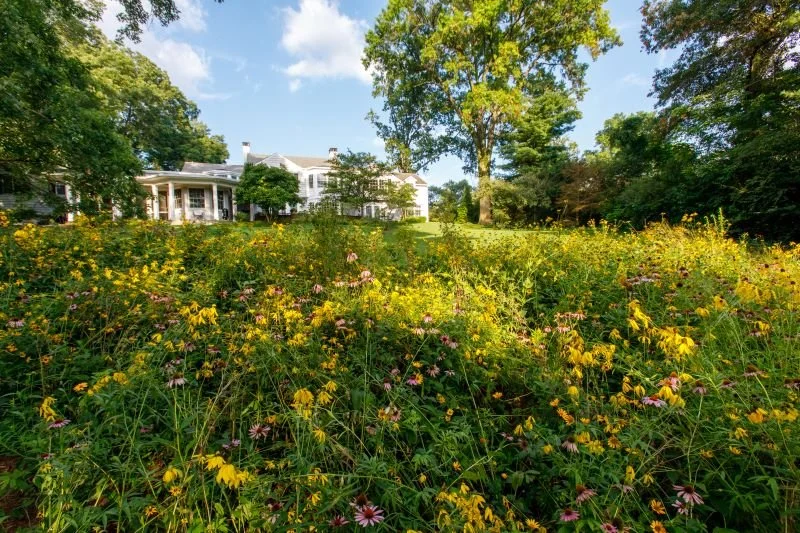
A vibrant pollinator garden attracts both beneficial insects and birds. Dense perennials and nearby evergreens provide cover for safety as well as nesting materials (Our Land Organics native landscape design & installation)
Offer cover for safety and nesting.
Layers of native plants don’t only offer vital food sources for birds; they also provide ample opportunities for shelter and nesting. Evergreens, shrubs, leafy deciduous plants, and brush piles all provide cover for birds seeking safety from predators and the elements.
Human-made bird houses also provide shelter for a variety of bird species including bluebirds, wrens, sparrows, and chickadees. Install bird houses on a fence post or hang them from a tree to protect residents from predators.
Finally, consider supplying birds with natural materials to support their nest-building. In the fall, allow spent seedheads to remain on your plants, as these can provide materials for nesting. You could also fill an empty suet cage or bird feeder with bits of organic material such as grass clippings, dried leaves, and pet hair.
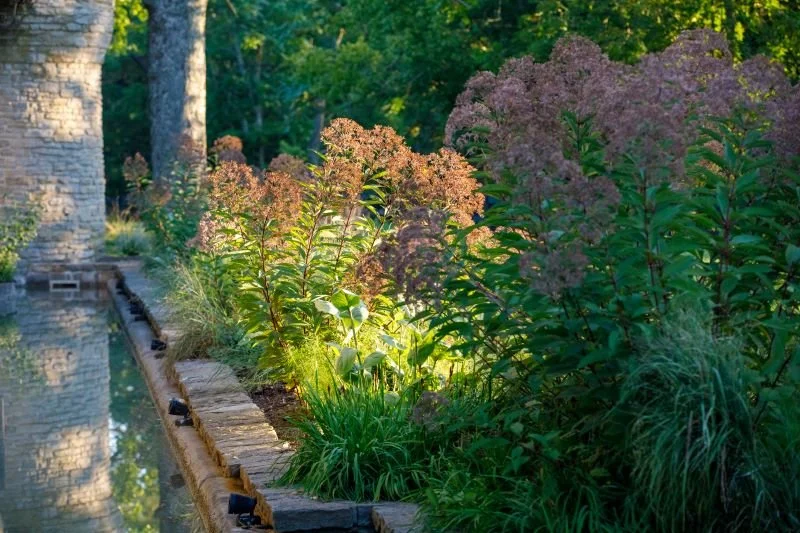
Joe-Pye weed is beloved by a wide variety of insect pollinators, who in turn attract birds. A water source makes this landscape extra enticing (Our Land Organics native landscape design & installation)