
Winter is a slower time of rest and dormancy in the garden, but there are still a number of gardening tasks that can be performed. In particular, selective winter pruning provides a number of advantages over pruning during the growing season.
First, the cold weather will kill nearly all bacteria, fungus, and pests that may pose a threat to a recently pruned tree, making winter a safe time to prune most trees and shrubs.
Second, because most trees and shrubs are dormant during the winter months, they can devote more energy to quick recovery from pruning wounds because they’re not trying to grow new leaves and fruit.
Below, we’ll take a closer look at pruning goals and what exactly should and shouldn’t be pruned in winter.
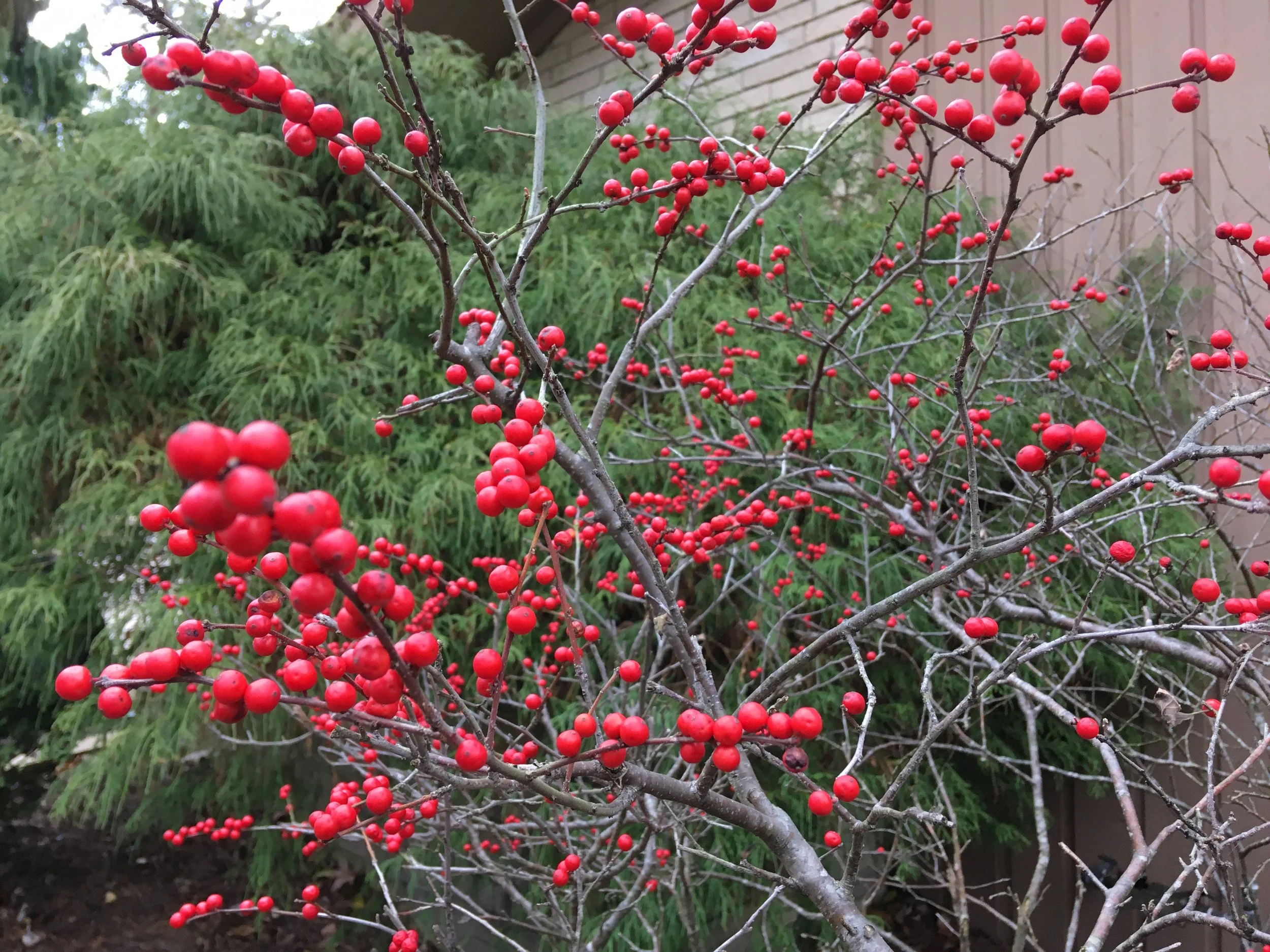
Why Do We Prune Trees and Shrubs?
Pruning is a necessary maintenance task to promote healthy plants and prevent on-site safety hazards. But when done haphazardly, it can have adverse consequences.
Whatever the reason for pruning, it is important to understand your goals and visualize the desired outcome before making any cuts.
Common goals include: avoiding interference with roof gutters or overhead power lines, thinning a canopy to increase the amount of sunlight and air flow through a plant, removing dead or diseased wood, or rejuvenating an older shrub to encourage a new flush of growth.
What Not to Prune in Winter
While winter is a great time to prune many trees and shrubs, there are a number of exceptions to be aware of:
Spring-blooming Trees and Shrubs
Early-blooming plants form their blooms late in the preceding season, so pruning these plants during the winter will effectively remove that season’s blooms before they get a chance to open. For fruit trees, this will also result in a reduced crop.
Avoid pruning Dogwoods, Redbuds, Forsythia, Viburnum, Lilac, and other spring bloomers in winter.
Trees and Shrubs that “Bleed” During Winter Pruning
Trees that produce large amounts of winter sap will “bleed” heavily if pruned in the winter time. This does not present a health threat to the plant, but it can create an unsightly mess.
Avoid pruning Maples, Beeches, and Dogwoods to prevent unnecessary bleeding.
How to Prune in Winter
A high priority when pruning at any time of the year is to remove dead or damaged wood. Dead wood poses safety risks and can cause extensive damage to other plants as well as nearby structures.
Similarly, damaged wood—such as a branch broken by deer, wind, or blighted with disease— should be removed to prevent further spread to other parts of the tree. Trees are remarkably capable of healing themselves when clean cuts are made, but broken branches and bark tears will not fully heal and will make the tree susceptible to other, more serious issues.
Structural pruning is easier in the winter months because the canopy is seen and accessed easily. Removing crossed branches is an important task, as branches that rub together can create open wounds in the bark. Similarly, branches that join in an acutely angled ‘V’ will be likely to break and tear during storms and heavy winds. Removing these branches and balancing the weight of a tree can go a long way toward avoiding future damage and keeping your property safe.
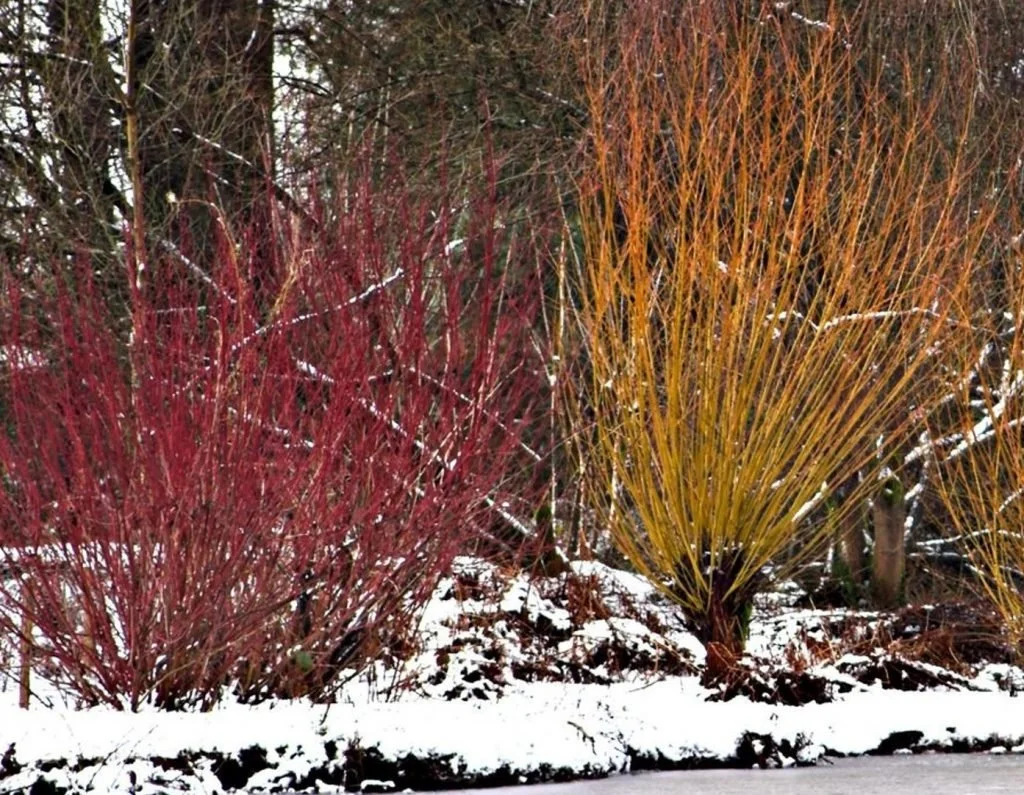
Lastly, shrubs age just like people do, and they occasionally need rejuvenation pruning to encourage new growth. A terrific example of this is the showy Red-twig Dogwood, which is prized for its bright red winter color. As Red-twig Dogwoods age, however, their branches will fade to brown, become rigid, and may be easily broken. Regularly pruning one-third of the canes down to the ground will encourage the shrub to send out young, pliable growth that is bright and beautiful in color.
Rejuvenation pruning will often bring new life to a shrub, but the benefits provided are not only aesthetic. Old growth can often cause a shrub to become crowded, reducing the amount of light that is absorbed by newer branches and furthering the process of decay.
How to Identify Dead Wood in Winter
One obvious obstacle to winter pruning is that determining whether a branch is dead can be difficult without the presence of leaves.
Luckily, there are two simple ways to tell if a branch is dead without relying on leaves:
Scratch Test for Dead Wood
If you suspect a branch is dead, gently scratch the bark with your fingernail. If the layer just beneath the bark is green, then the branch is alive and well. If the layer beneath the bark is brown, then it is dead. Branches will die from tips inward, so it is important to do the scratch test in a few places to ascertain the extent of the die-back.
Flex Test for Dead Wood
Alive wood should be somewhat pliable and flexible, so another way to determine if a branch is alive or dead is to bend it at the tip. Alive wood should bend without breaking, whereas dead wood will easily snap. Again, conduct this test working from the tip of a branch inward to determine the extent of die-back.
Now is a great time to plan for winter pruning, which entails both art and science. We are currently taking on winter land care clients and would be happy to assist you with pruning and other winter garden tasks. Contact us to learn more!
Resources: