
Reclaiming a Landscape from Invasive Plants
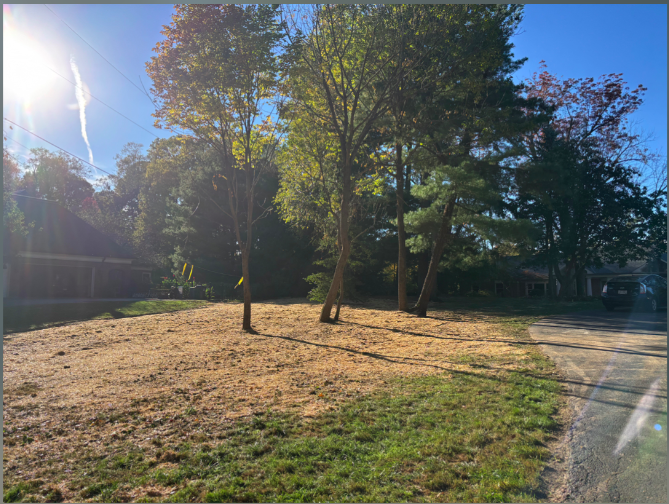
AFTER: After removing invasive honeysuckle and wintercreeper, a refreshed landscape is revealed. The mature trees shine; homeowners enjoy clear sightlines, and desired plants have room to grow. Over time, the grass seed will fill in and can be maintained easily via regular mowing.
“The Our Land team is knowledgeable, professional, and passionate about native plants and wildlife. Our neighbors and we have chosen them for several projects and have been highly satisfied with their timeliness, responsiveness, attention to detail, and dedication to getting it right for both homeowners and the local flora and fauna.
Invasives like honeysuckle, Canada thistle, and chameleon weed had taken a strong hold in our yards. It feels good as parents, grandparents, and pet owners to have tackled these without resorting to the use of harmful herbicides.”
– Sean M., Client
The Challenge
At this Amberley Village residence, invasive bush honeysuckle and wintercreeper had run rampant for years.
The honeysuckle was spreading across the property, crowding out the understory beneath mature trees and making it difficult to decipher the landscape. Many of the honeysuckle had grown very large, blocking sightlines and creating conflicts with overhead utility lines.
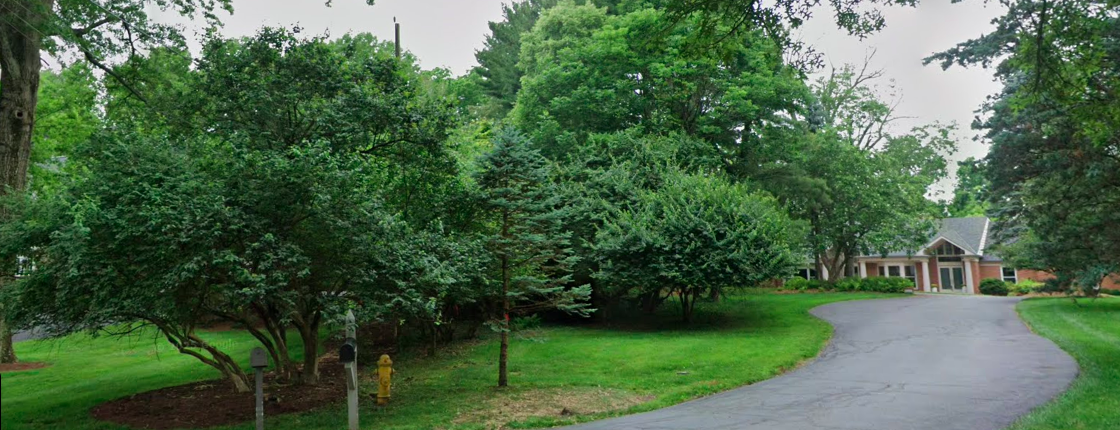
BEFORE: Invasive bush honeysuckle crowds the landscape, competing with desired trees and creating a “cluttered” look and feel.
Meanwhile, the wintercreeper was damaging native trees and encroaching into lawn areas. This plant is an aggressive groundcover and vine that will take over large swaths of a landscape and swallow whole trees if left unchecked.
The homeowners wanted to curb the spread of these invasive plants and rediscover how their landscape could look and function without the presence of invasive species. They also hoped to develop a lower-maintenance landscape.
The Transformation
The Our Land Organics team arrived on the scene ready to give this outdoor space a complete reset.
We began by removing all invasive species. As soon as we finished, it was like a breath of fresh air. The yard instantly opened up.
The open understory cleared sightlines and removed visual “clutter,” creating a calmer feel for anyone spending time in or looking at the landscape. The older trees really shine now, creating attractive places for human eyes to rest.
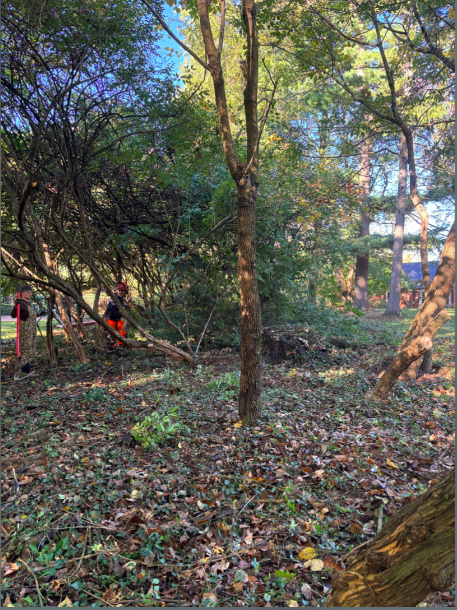
The Our Land Organics team at work removing invasive honeysuckle. We use mechanical methods and never employ toxic chemicals in our removal process.
After removing the wintercreeper that was spreading across the ground, we got to work converting the area to a low-maintenance lawn. We sowed grass seed that will fill in quickly, even in shady areas under the trees. Moving forward, the client will be able to easily keep invasives at bay via regular mowing.
As always, our team achieved all of this without a single drop of herbicide. We use mechanical methods to remove invasive species, thus avoiding any harm to the surrounding soil, plants that will grow from it in the future, and the wildlife who will use those plants to survive. Organic, non-toxic removal methods also are healthier for people and pets.
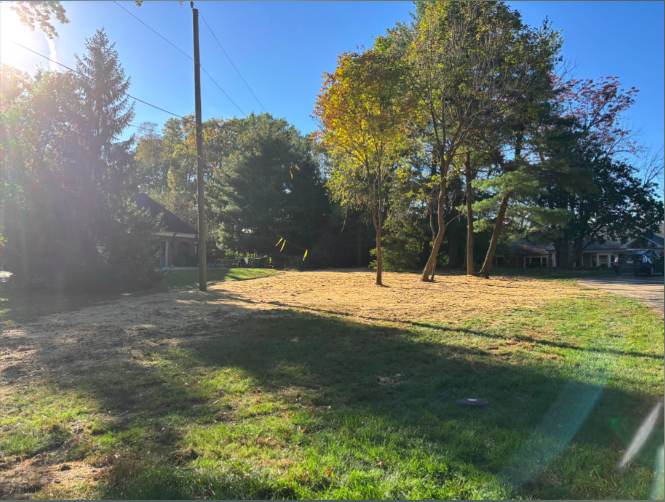
AFTER: With bush honeysuckle removed, desired trees shine and power lines can operate safely.