
Plant This, Not That: Native Alternatives to Callery Pear
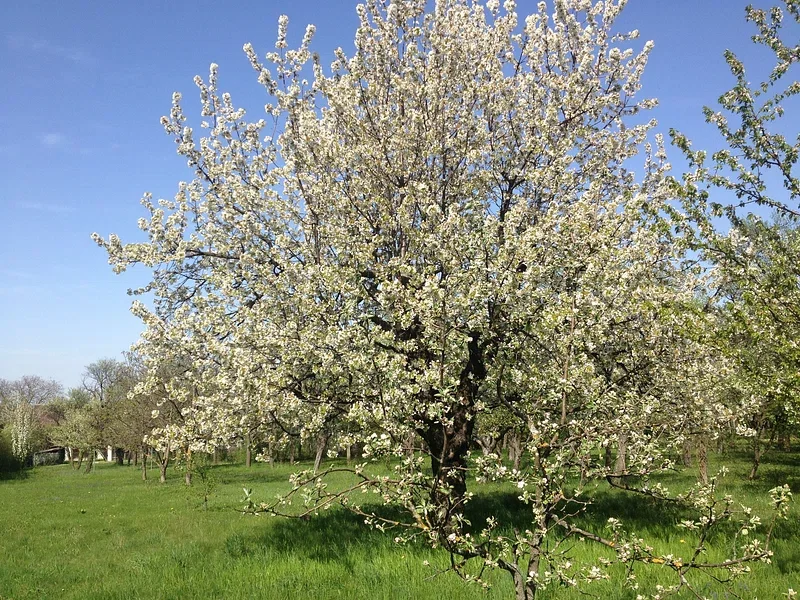
Callery Pear is a popular but highly invasive tree in Ohio.
The Callery Pear was originally introduced to create resistance to disease pressure in the commercial pear industry. Eventually, it was marketed and sold as an ornamental tree, especially the cultivated variety, ‘Bradford’ Pear.
Unfortunately, the Callery pear (including the ubiquitous ‘Bradford’ cultivar) spreads so quickly and aggressively that one established tree will soon create a dense thicket that can outcompete all other native tree or shrub saplings. In a matter of years, one Callery Pear can convert a fledgling forest into a dense monoculture.
In fact, the situation has gotten so dire that the propagation and sale of Callery Pear has recently been banned in Ohio due to its aggressive and invasive growth.
Also, Callery Pear has proven to be a particularly weak-wooded tree. You yourself have likely observed broken and splintered specimens while driving or hiking. This is particularly inconvenient given their popular use in the 1950s and ’60s as ornamental sidewalk trees; they frequently fall on utility lines.
Luckily, there are a number of native alternatives to Callery Pear, all of which offer the same ornamental benefits while adding ecological benefits as well.
The Best Native Alternatives to Callery Pear
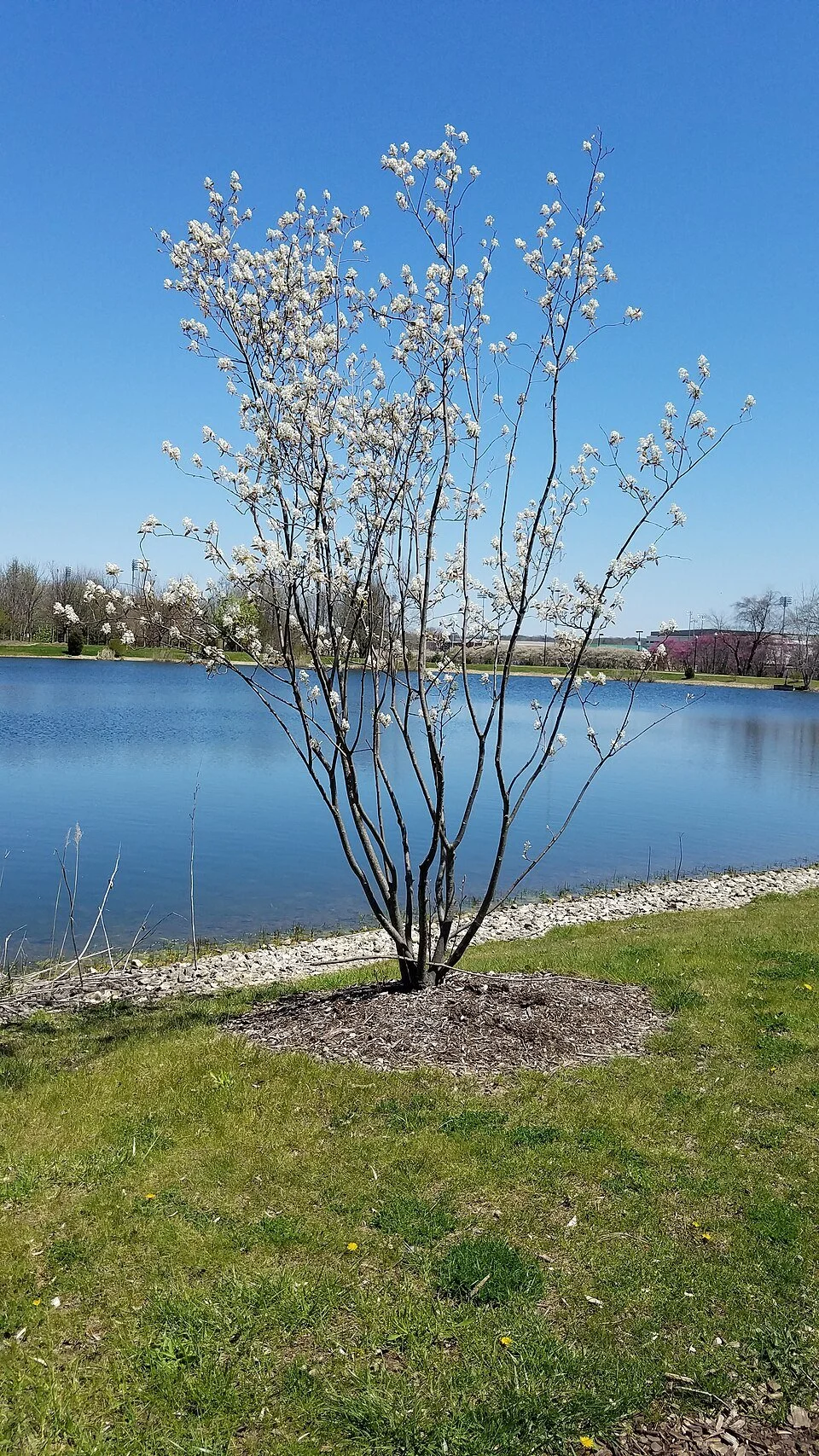
A native Serviceberry tree (Amelanchier canadensis)
1. Serviceberry (Amelanchier canadensis)
Serviceberry is a native alternative to the Callery Pear that offers similarly beautiful blossoms. As a bonus, it also provides edible fruit for people and for the birds who visit their yards.
Serviceberry provides a beautiful blooming show in the spring, then turns bright red in the fall. These trees are self-pollinating, so planting a single tree will give you a bountiful harvest.
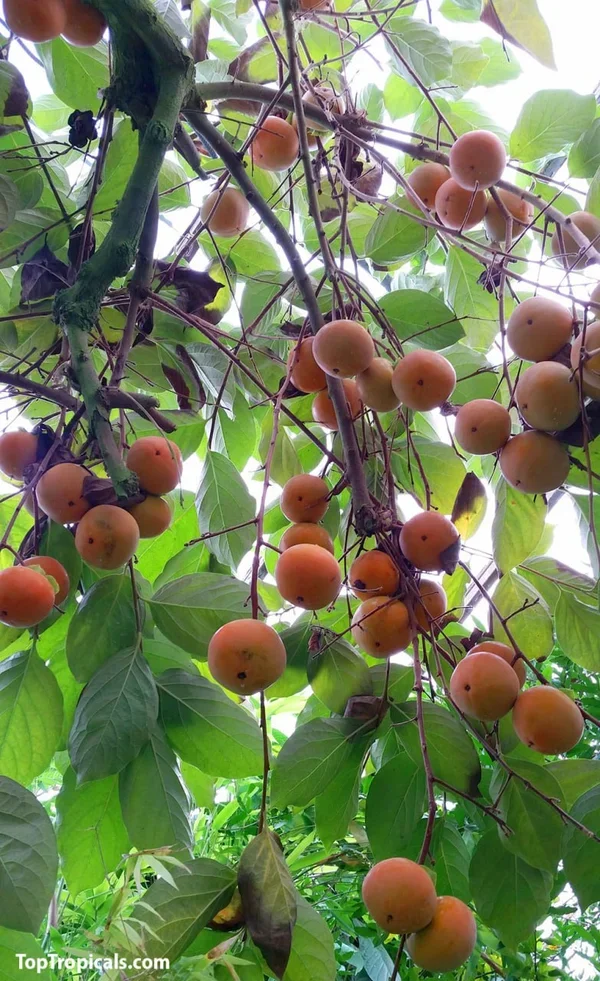
American Persimmon (Diospyros virginiana) provides tasty fruit for both humans and wildlife.
2. American Persimmon (Diospyros virginiana)
Like Serviceberries, the American Persimmon is a native tree that produces edible fruit for people and wildlife. When Persimmon is planted in the right spot, it can grow quite large (up to 60 feet!). A male and female tree must be planted within 100 feet of each other for trees to fruit.
Both serviceberries and persimmons can be eaten raw or turned into a delicious jam.
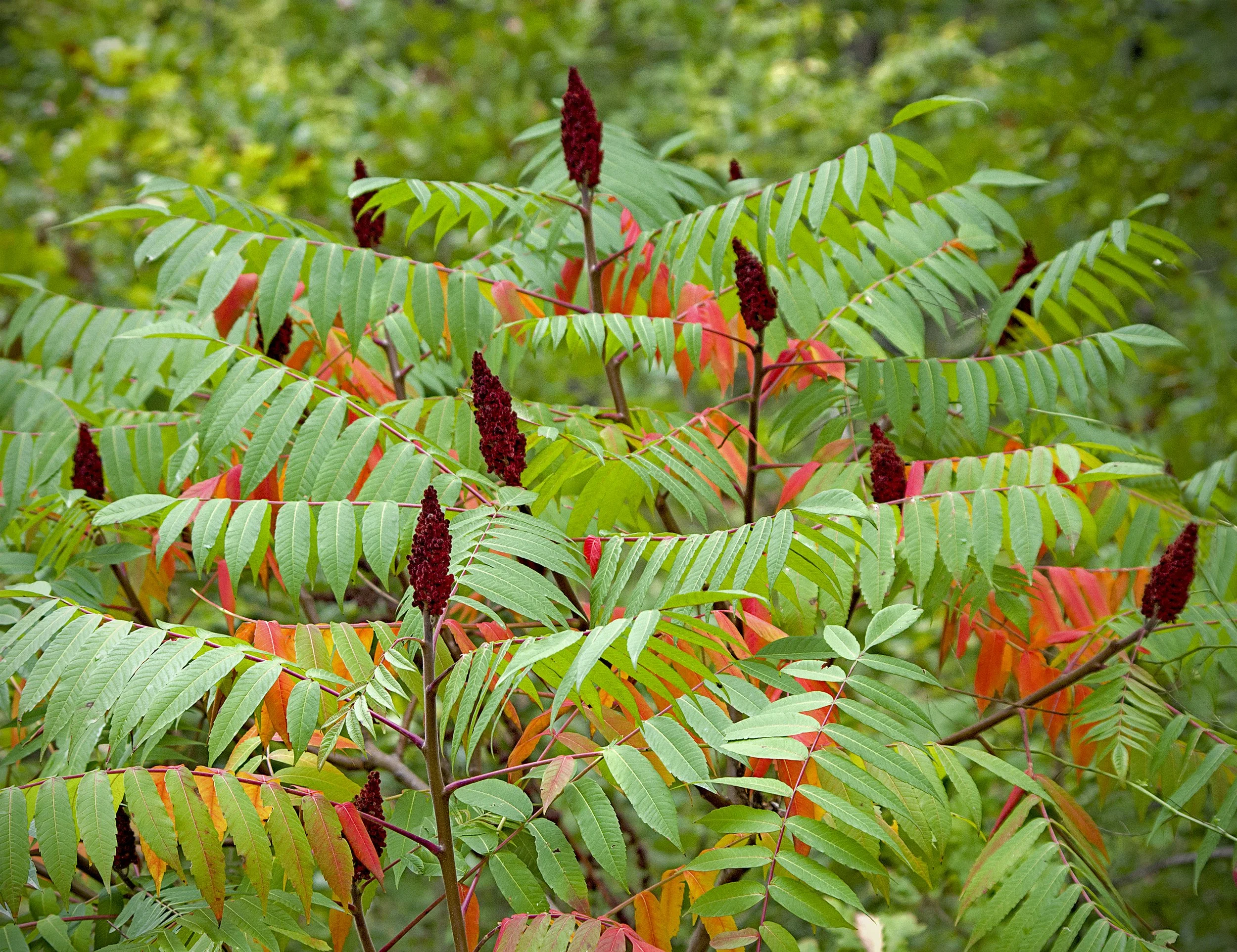
Staghorn Sumac (Rhus typhina) offers strikingly unique visual interest in the landscape
3. Staghorn Sumac (Rhus typhina)
One non-fruiting tree we use to replace the ornamental Callery Pear is the Staghorn Sumac, an oft-forgotten native tree featuring breathtaking fall foliage.
Staghorn Sumac also produces a dramatic-looking fruit that persists in winter, providing winter interest in the landscape and offering food for a variety of wildlife — including more than 30 species of songbirds!
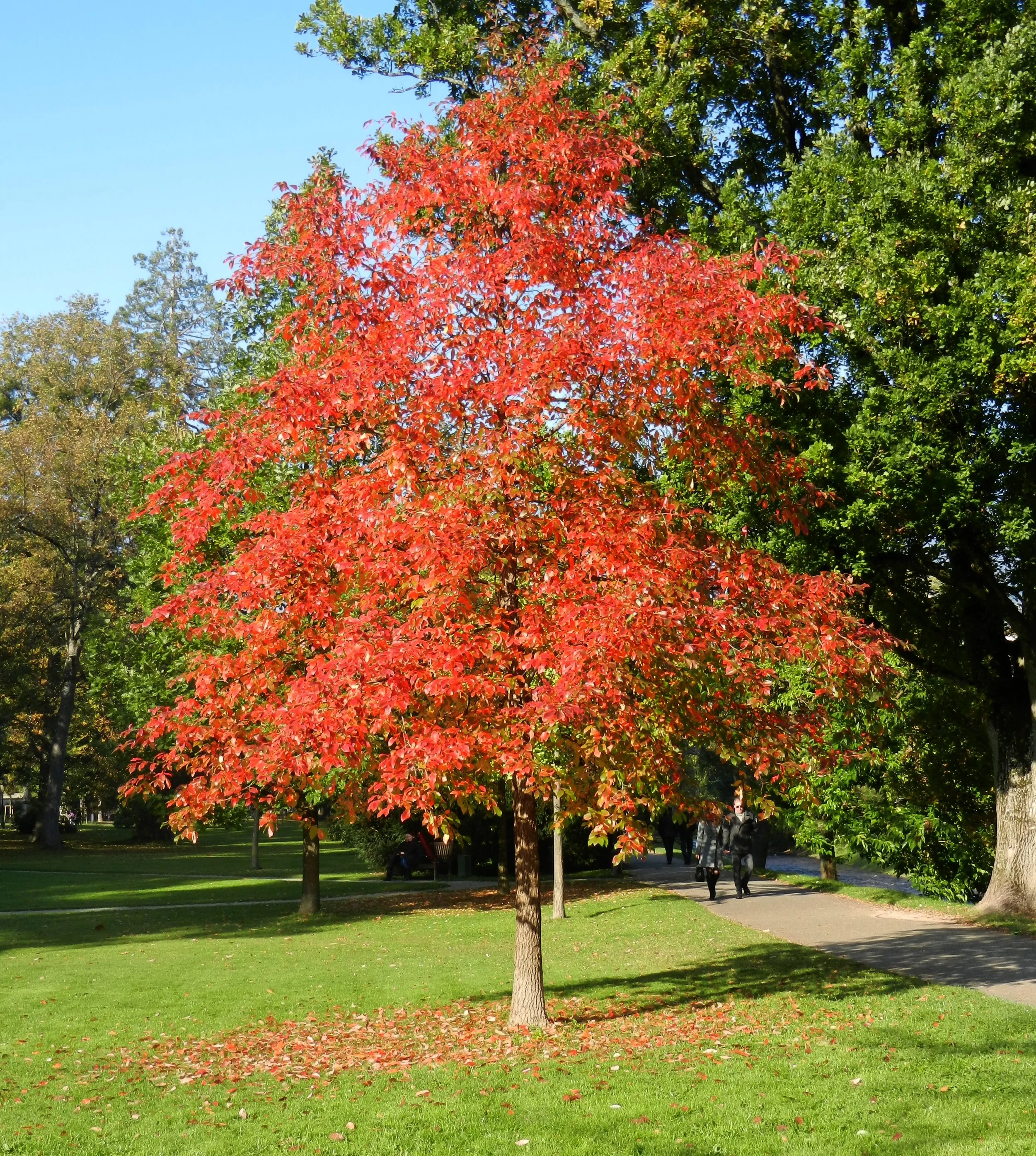
Blackgum (Nyssa sylvatica) creates a stunning fall display.
4. Blackgum (Nyssa sylvatica)
Another taller, non-fruiting replacement for Callery Pear is Blackgum. This tree showcases a spectacular fall display of crimson foliage and provides a number of ecological benefits.
Its flowers are an important source of nectar for honeybees; its fruit provides nutrition for a variety of birds; and its branches frequently house a number of tree-dwelling animals.
To learn more about what we at Our Land Organics are doing differently to introduce native plants into landscapes, or to take the first step toward removing Callery Pear from your yard, contact us or schedule a consultation.
Sources: