New Trends in Native Landscaping
For more than a decade, Our Land Organics has offered ecologically focused native landscaping designs and maintenance.
When we first started out, not many people knew about native plants, and conventional landscape practices — including the use of pesticides and herbicides, water-hungry systems, and so on — dominated the industry.
It’s been amazing to witness more and more people step into caring for our ecosystems by doing what they can in their own yards. There is so much power in these choices. When native landscaping is done well, everything works together to support the diverse needs of people, plants, and wildlife. That’s what we strive for every day.
As native landscaping goes mainstream, here are some trends that we’re observing. We look forward to the day when these trends are standard across the entire landscaping industry!
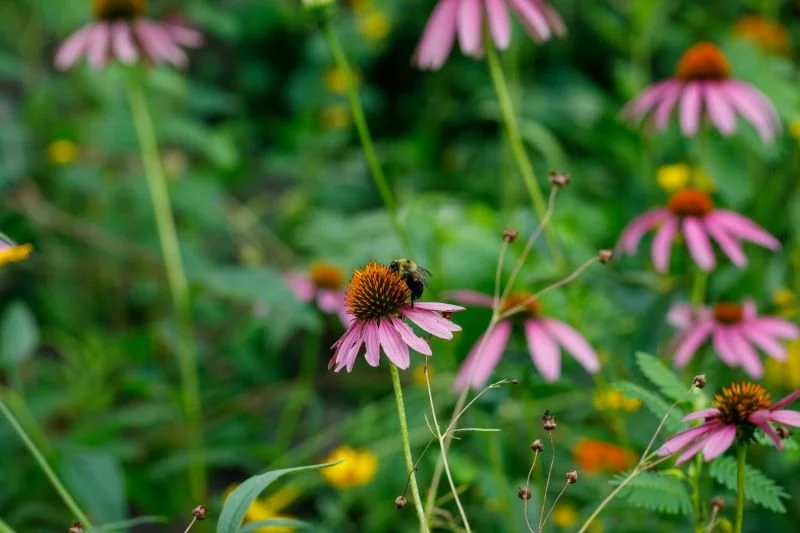
A bumblebee enjoys a native plant buffet in an Our Land Organics client’s landscape
Designing for pollinators
More and more people are approaching their landscapes from a pollinator-first perspective, prioritizing ecological and wildlife value above all else. These priorities inform all sorts of design and landscape maintenance choices, including which plants to use and how to steward each garden.
As just two examples, our native landscape designs include a cascade of multi-season perennials and diverse flower types to provide a wide array of pollinators with food and habitat across the seasons. Our Earth Stewards conduct plant cut-backs at appropriate times to protect overwintering beneficial insects.
These and other practices arise from an ecology-first approach to native landscape design and maintenance that is increasingly in demand.

Native sedges help hold hillside soil in place while providing a calming resting spot in this backyard restoration project (Our Land Organics design & installation)
Using native groundcovers as “living mulch”
Many conventional groundcovers, such as English ivy and wintercreeper, are ecologically damaging. They crowd out native plants, harm trees, provide little in the way of pollinator value, and disrupt healthy ecosystem functions.
Native groundcovers, on the other hand, provide the same value as conventional groundcovers in addition to ecological benefits. These hardworking groundcovers help suppress weeds, prevent erosion by stabilizing soil, and fill in gaps between other plants with attractive green color.
They also provide a banquet for pollinators, especially native caterpillars and moths. In fact, native groundcovers feed more pollinators than many native perennial flowers!
For all these reasons, native groundcovers are increasingly being used by ecologically-minded landscapers. Some of our favorites are native sedges, green-and-gold (Chrysogonum virginianum), and foamflower (Tiarella cordifolia). Click here to see one of our backyard restoration projects, which relied heavily on native groundcovers.

Winterberry, a native shrub, provides a striking alternative to blighted boxwood
Replacing boxwood with native plants
As Boxwood Blight continues to impact boxwood plants across Ohio, homeowners and landscapers are looking for resilient alternatives. Some of the best boxwood replacements are native shrubs.
At Our Land Organics, we’re experimenting with the best native options on a regular basis. Some of our favorites so far are:
Inkberry (Ilex glabra), an evergreen shrub that is native to eastern North America and has a very similar appearance to boxwood
Winterberry (Ilex verticillata), a deciduous native shrub with year-round visual interest thanks to bright berries that stay on branches through the winter
Sweetspires (such as Itea virginica), deciduous native shrubs with a height similar to boxwood and unique, showy flowers that appear in late spring to early summer

An Our Land Organics team member removes invasive honeysuckle from a backyard woodland in support of forest restoration