Gardeners have been dealing with weeds for as long as there have been gardens. Caring for a landscape involves helping desirable plants grow healthy and strong while discouraging the presence of unwanted plants (AKA weeds).
There’s an art and a science to weed management, especially if you’re choosing not to use toxic chemicals in your landscape. And unfortunately, there’s no one-time fix. Maintaining a low-weed garden requires ongoing landscape maintenance.
Below, we explain our organic approach to weed control and answer some of the weed-related questions that we hear most frequently from our clients. This information will support the reduction of weeds over time.
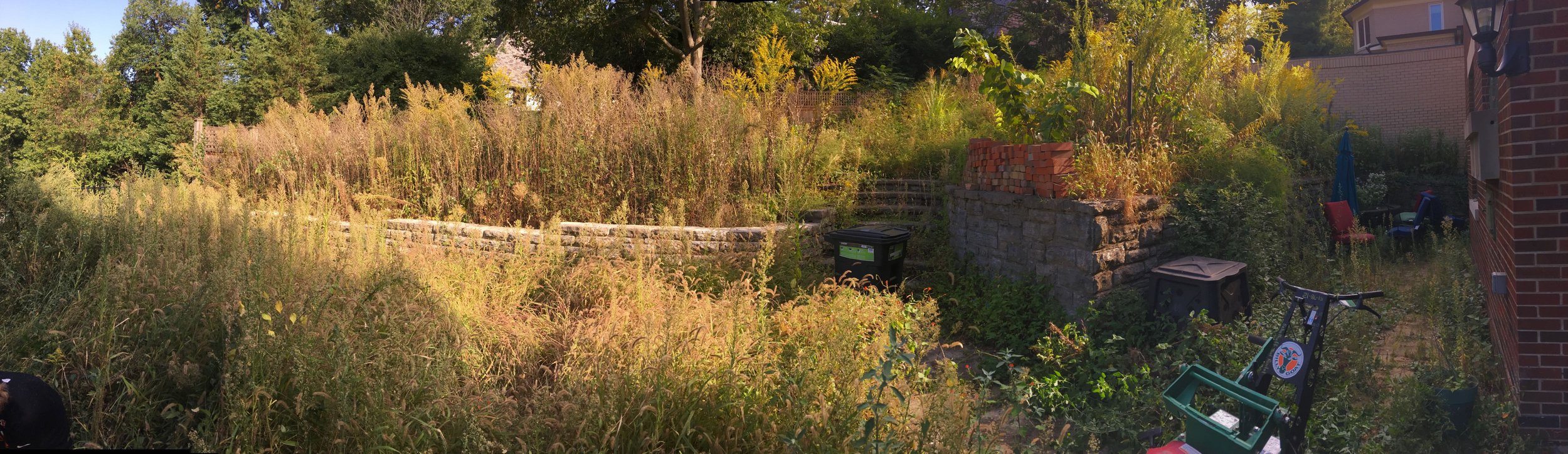
BEFORE: A landscape overrun with weeds
Our Organic Approach to Weed Management
At Our Land Organics, we work with nature to cultivate healthy, resilient, and ecologically productive landscapes. Our weed control methods are researched, targeted, and designed to manage unwanted plants without causing unnecessary harm to the surrounding landscape or environment.
In practice, this means:
We do not use synthetic herbicides or toxic chemicals.
We tailor our approach based on the specific weed species and site conditions.
We understand that weeding is not a one-time fix, but part of an ongoing landscape management strategy.
AFTER: Our Land Organics reclaimed this landscape from weeds, adding native plants and raised beds for edible gardening
FAQ: Organic Weed Control
Where do weeds come from?
Weeds are opportunists. They arrive in gardens in many ways: carried by the wind, dropped by birds, tracked in on shoes or equipment, or already present in the soil.
What can I do to reduce the number of weeds in my garden?
Weeds will always be part of outdoor environments, but there are ways to reduce weed pressure over time.
Covering bare soil with desirable plants is one of the best long-term strategies. Native ground covers, dense plantings, and healthy mulch layers help reduce the open space where weeds can establish.
Should I use landscape fabric to reduce weeds?
We do not recommend landscape fabric as a long-term weed-control solution in garden beds. Occasionally, we will use landscape fabric in specific applications such as under a pathway or in a dry creek bed. But it’s not an effective weed control solution outside of these contexts.
In fact, we often find that weeds eventually sprout on top of landscape fabric. And once the fabric is in place, it makes hand weeding, hoeing, planting, and soil cultivation much more difficult. Over time, landscape fabric can interfere with the natural integration of organic matter into the soil, which is an important part of building healthy, living soil.
Why do weeds keep emerging after they’ve been removed?
Even when landscape maintenance work is performed properly, activities such as digging, edging, planting, and bed cleanup can disturb the soil and bring dormant weed seeds to the surface. Weed seeds also can continue to arrive by wind, birds, animals, and foot traffic.
Soil disturbance does not introduce new weed seeds, but it can create the conditions for existing dormant seeds to germinate. Many weed seeds can remain dormant in the soil for years. When soil is disturbed and sunlight reaches those seeds, they may begin to germinate. Still, soil disturbance in support of landscape enhancements provides net positives over time.
All of this explains why weed control is not a one-time event. It is an ongoing process of reducing weed pressure while helping desirable plants fill in, effectively compete with weeds, and thrive.
How do you distinguish weeds from plants that should stay?
This is an important part of ecological landscape care. Some plants that look “weedy” at first may actually be native volunteers, desirable ground covers, or plants that are part of the design intent.
For this reason, it’s helpful to have experience with plant identification or consult someone who does. Our clients are always welcome to ask us about the plants emerging in their gardens. We are happy to help identify plants and explain whether they should stay or go.
How do you treat weeds growing in driveway, sidewalk, or patio cracks?
Our typical approach is to first remove or cut back the top growth using hand tools or string trimmers. When appropriate, we may then apply an OMRI-listed organic herbicide directly to the remaining plant tissue or root zone. This targeted approach helps keep hardscape areas looking clean while avoiding unnecessary treatment in surrounding garden beds.