
6 Native Plants with Medicinal Benefits
If you’re reading this, you know that native plants offer tremendous value to our ecosystems, pollinators and other wildlife, and people.
One lesser-known benefit is that many of our region’s native plants are packed with medicinal properties that have been used by people for thousands of years.
Adding native medicinal plants to your landscape maximizes the value of your yard by “stacking” functions. Not only can you provide food and habitat for wildlife, suppress weeds, reduce yard maintenance, and add beauty to your property. You can also take advantage of edible and medicinal benefits.
Below, we’ve outlined six of our favorite medicinal native plants, all of which are frequent flyers in our ecological landscape designs.
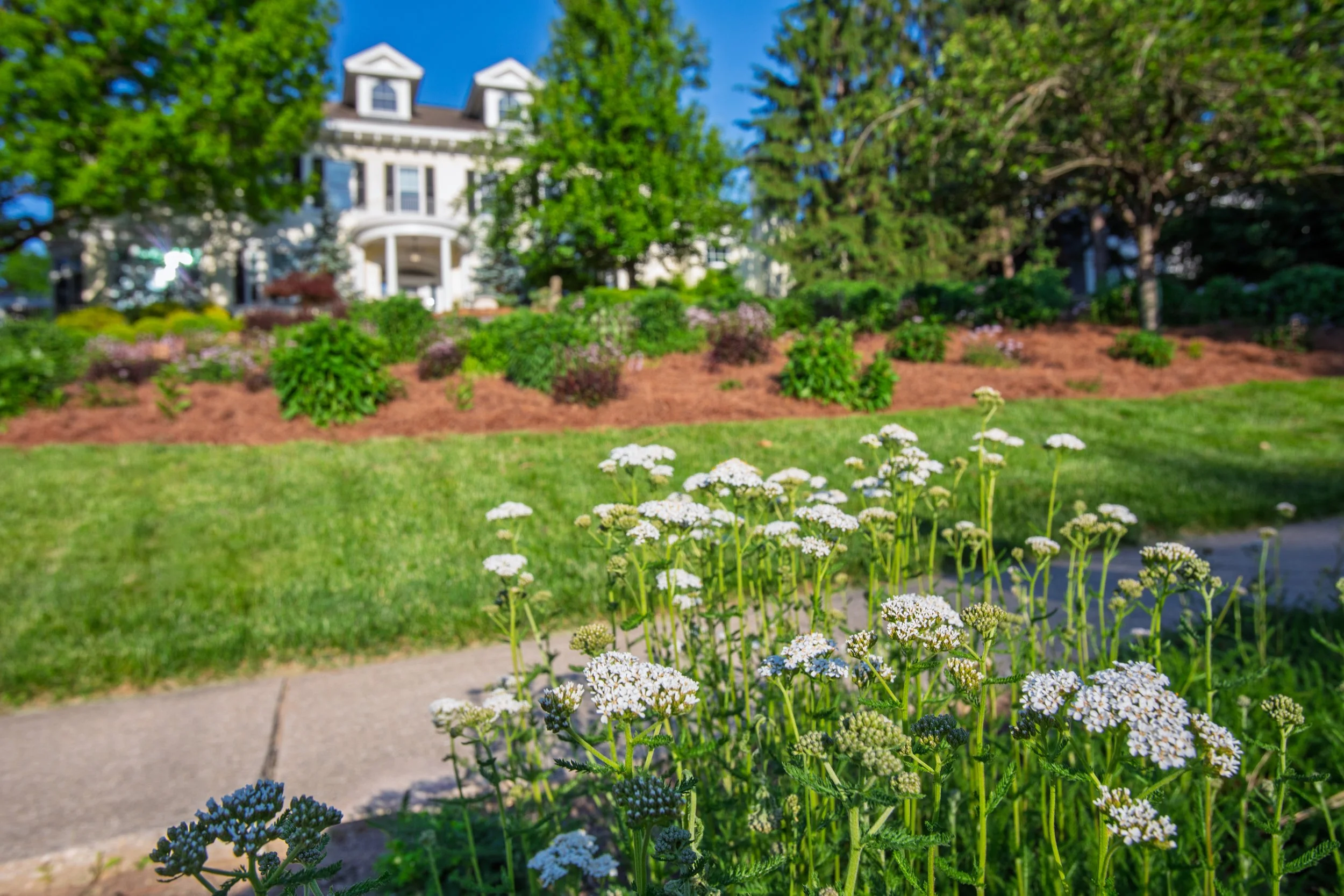
Yarrow is a native plant with medicinal properties (Our Land Organics design & installation)
6 Native Medicinal Plants
American Elderberry (Sambucus nigra L. ssp. Canadensis)
Elderberry is a vigorous native shrub that grows well in a variety of conditions. It produces fluffy clusters of white flowers in late spring to early summer, followed by clusters of small, dark purple fruits in mid-summer to early fall.
Many people are familiar with elderberries' medicinal benefits. The plant is a staple in over-the-counter remedies for colds and general immune support. The berries pack an antioxidant punch that can be harvested for use in medicinal tinctures or syrups.
Blue Violet (Viola sororia)
Blue violets are prolific growers found in yards and other natural spaces throughout Ohio and Kentucky. Both the flowers and leaves are edible, and they’re packed with vitamins A and C as well as antioxidants. The leaves and flowers are mucilaginous, and this soothing substance is used in herbal remedies for dry skin and respiratory congestion.
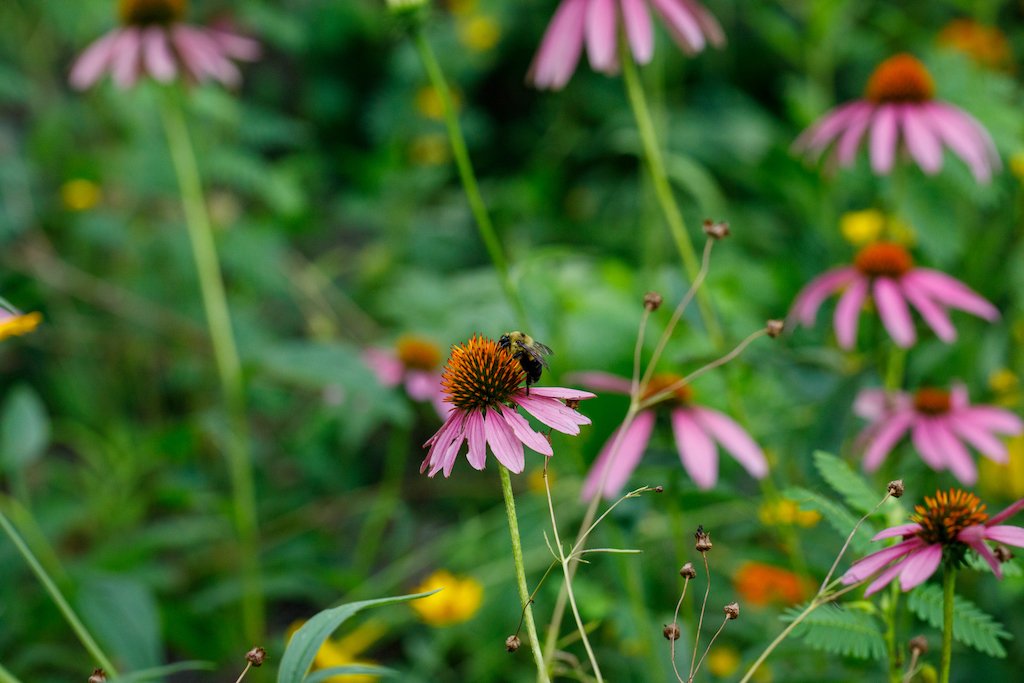
Echinacea is a durable native plant with medicinal properties
Echinacea (Echinacea purpurea)
Echinacea grows naturally in moist prairies, meadows, and open woods. It’s a staple in native landscaping thanks to its colorful blooms, versatility in a variety of growing conditions, and value for pollinators.
Echinacea also offers human benefits in the form of medicinal uses. It’s high in antioxidants, helps reduce inflammation, and may support immune system function. Many people reach for echinacea teas or extracts when they feel an illness coming on. It also can be applied topically for minor skin wounds and irritation.
Ohio Spiderwort (Tradescantia ohiensis)
Ohio Spiderwort is a durable, low-maintenance, and beautiful perennial native plant. It produces striking bluish flowers in late spring through early summer; these blooms support bumblebees and other solitary native bees.
The plant has a rich history as an herbal remedy used by indigenous peoples. Its leaves produce a mucilaginous gel that can ease the pain of bee stings, insect bites, or other minor skin irritations. The plant also has been used to support digestion and assist with kidney function.
Spicebush (Lindera benzoin)
Spicebush is a dependable native shrub that grows well in woodlands or other shady settings. The shrub’s twigs, leaves, and berries are all edible, making this one of our favorite edible native plants. This also might help explain Spicebush’s prominent role in indigenous and early American traditional herbal medicine.
Depending on the part(s) of the plant used and the preparation, Spicebush may be helpful in soothing cold and flu symptoms, relieving upset stomach and other digestive issues, and easing bruising, swelling, or skin irritation, among other potential benefits.
Witch Hazel (Hamemelis virginiana L.)
This native shrub or small tree is very unique thanks to flowering in the late fall, which results in blossoms that linger on the trees into the winter (even after the leaves have dropped).
Not only does witch hazel provide winter interest in the landscape, it also offers medicinal benefits. Witch hazel’s antioxidant and astringent properties make it a staple of historical and modern skin care. It’s used in the treatment of acne, scalp irritation, and skin irritation from minor cuts, scrapes, insect bites, and so on.
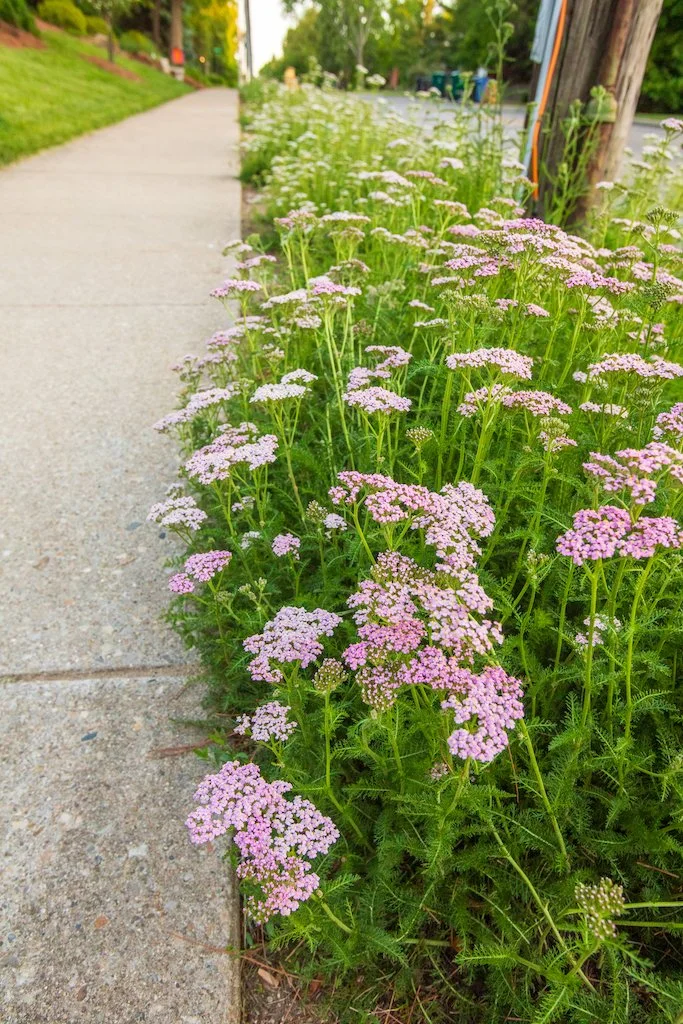
Yarrow is a durable native plant with medicinal properties
Yarrow (Achillea millefolium)
We frequently use yarrow in our landscape designs thanks to its high pollinator value, durability even in tough growing conditions, contributions to soil health, and dependable summer blooms.
Beyond the landscape, yarrow has long been used in traditional medicine. Its astringent tannins can help stop bleeding and support skin recovery from minor wounds. It’s also used in teas for digestive support and may ease cold and flu symptoms.
Curious about adding more medicinal or edible plants to your native landscape? We are always happy to assist with new landscape designs or garden edits to add even more value to your land. Get in touch to discuss your goals!
Disclaimer: The information contained here is purely for educational purposes and should not be taken as medical advice. It’s always a good idea to consult a medical professional prior to trying herbal remedies.