6 Stellar Native Groundcovers
In ecological circles, bare soil is verboten.
That’s because exposed soil poses several issues:
It loses moisture more quickly than covered soil, making it harder for plants to thrive.
It’s more prone to topsoil loss during rain events, which strips the soil of nutrients.
It can harm the microbial networks that are vital for plant health and ecosystem functions.
It creates opportunities for weeds to proliferate.

Native sedges are some of our favorite groundcovers
For these reasons and more, we’re a huge fan of covering soil. The most common term for “soil cover” is (maybe you guessed it)... mulch!
When you hear the word “mulch,” maybe you picture a big pile of woody mulch delivered to your driveway. This kind of mulch is certainly useful in the garden.
But there are other ways to cover up soil, too. For instance, you could rake fallen leaves into your garden beds in the fall and allow them to persist as a mulch layer through the next year’s growing season.
Living plants can also be used to effectively cover soil as a sort of “living mulch” or “green mulch.” Another term for living plants that help protect the soil is groundcovers.
Our designers are big proponents of groundcover plants because they provide the benefits of mulch while offering additional aesthetic and ecological perks in the garden. Native plant groundcovers, in particular, offer food, cover, and nesting material for a variety of pollinators. They’re also extremely helpful for suppressing weeds.
6 of Our Favorite Native Groundcovers
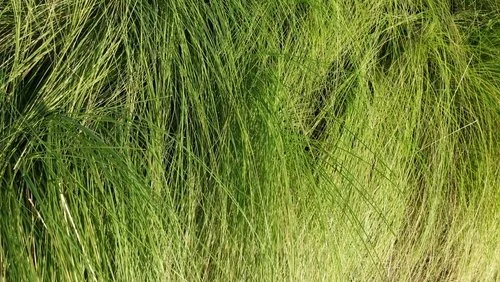
Pennsylvania Sedge or Oak Sedge (Carex pensylvanica)
This popular native sedge is desired for its short stature and its tolerance of both shade and dry soils. It features fine-textured stems that grow in an arched shape, creating a “flowy” appearance when planted en masse. The sedge spreads slowly via underground rhizomes that can help reduce erosion. It respects other plants in the garden and requires very little maintenance.
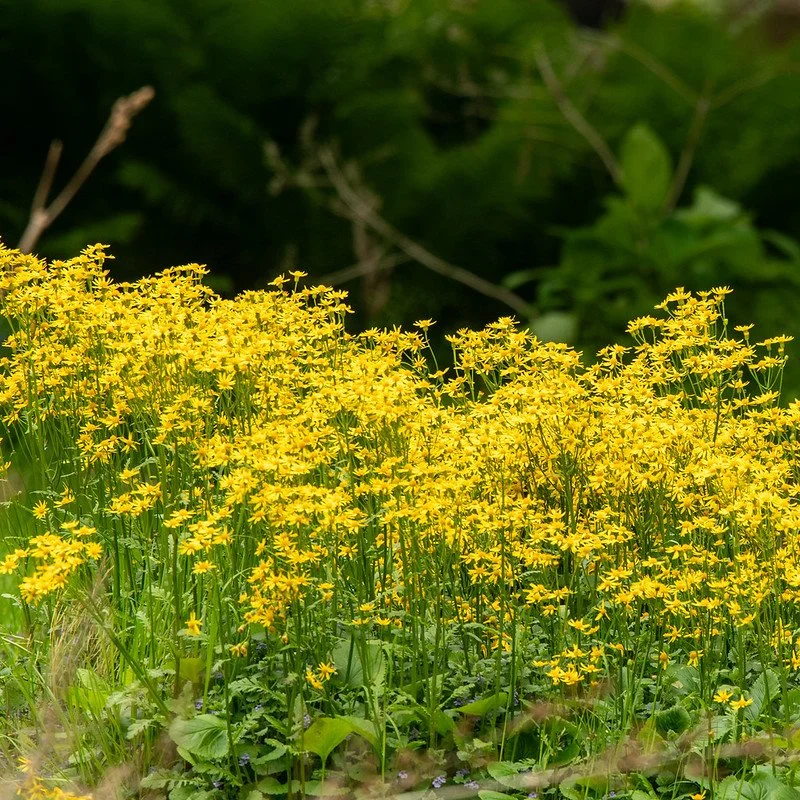
Golden Ragwort (Packera aurea)
This versatile native perennial boasts bright yellow flowers that add a cheerful pop of color to the spring garden. It spreads prolifically (some might say “aggressively”) via seed, which can be useful in the right site or reined in via deadheading. It grows well in a variety of light and soil conditions, including woodland edges, moist meadows, and rain gardens. This deer-resistant plant helps reduce erosion, suppress weeds, and cool the soil via shade from its leaves.
Photo Credit: Jean Barrell
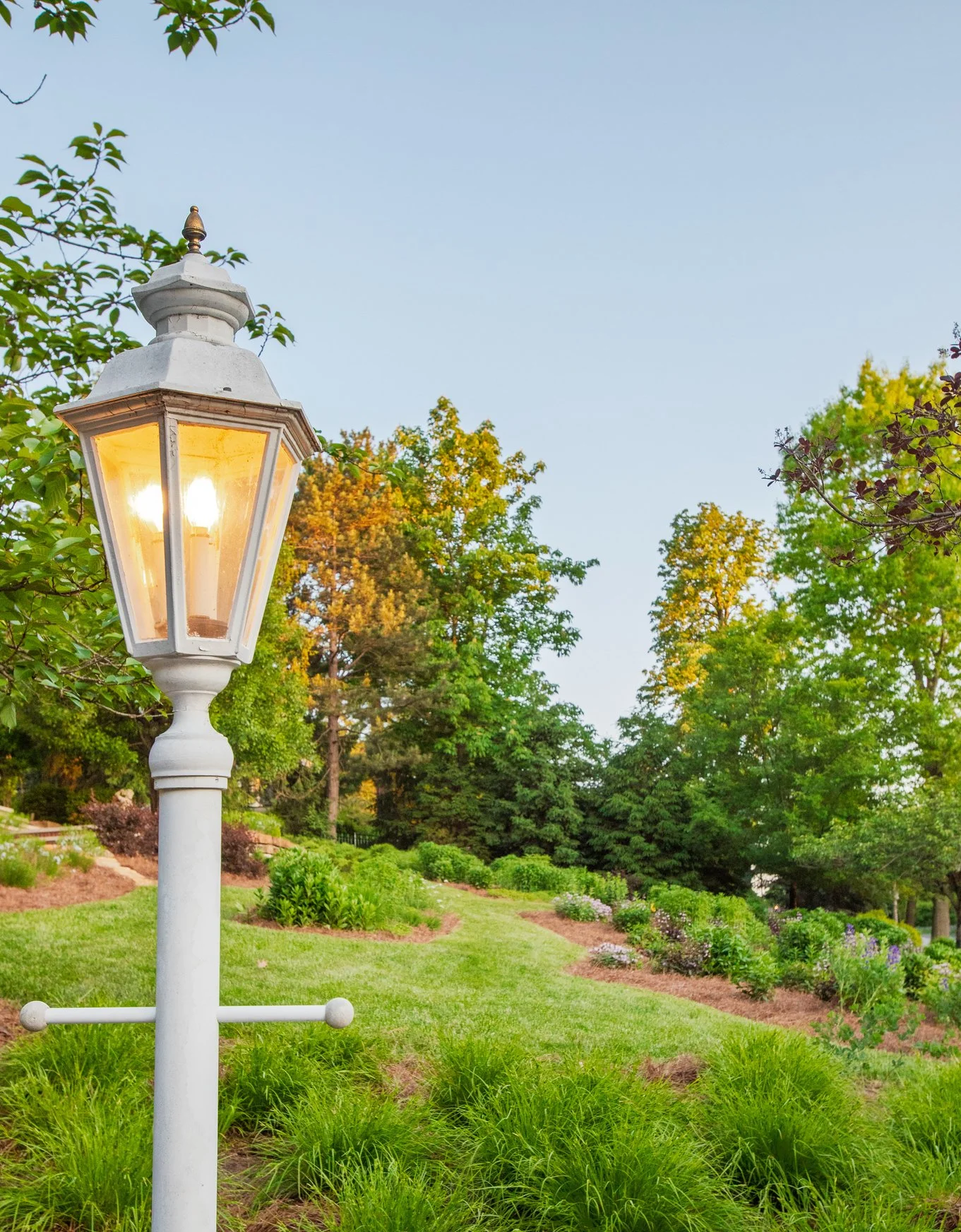
Eastern Narrowleaf Sedge (Carex amphibola)
Otherwise known as Creek Sedge, this native sedge is adaptable to many landscapes including woodland gardens, rain garden perimeters, and slopes in part or full shade. It boasts bright green stems and maintains a tidy habit in the form of fountain-shaped mounds, making it a fantastic native alternative to Liriope. It’s a strong grower that stays semi-evergreen for most of the year. The deer-resistant plant also serves as a larval host for skipper butterflies.
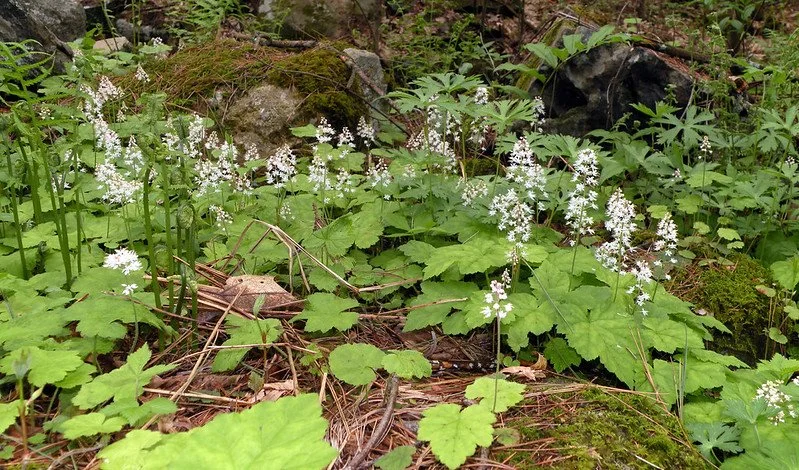
Foamflower (Tiarella cordifolia)
This shade-loving native perennial offers early spring blooms that account for the “foam” in the plant’s name. White flowers form along long stamens, and these “foamy” bottlebrushes stand out against the contrast of green, heart-shaped leaves. This low-maintenance plant will spread via runners and rhizomes to form dense colonies over time, meaning it’s a groundcover that keeps on giving. It’s well suited to woodland edges, shaded gardens, and other sites with rich soil and part to full shade.
Photo Credit: Doug McGrady
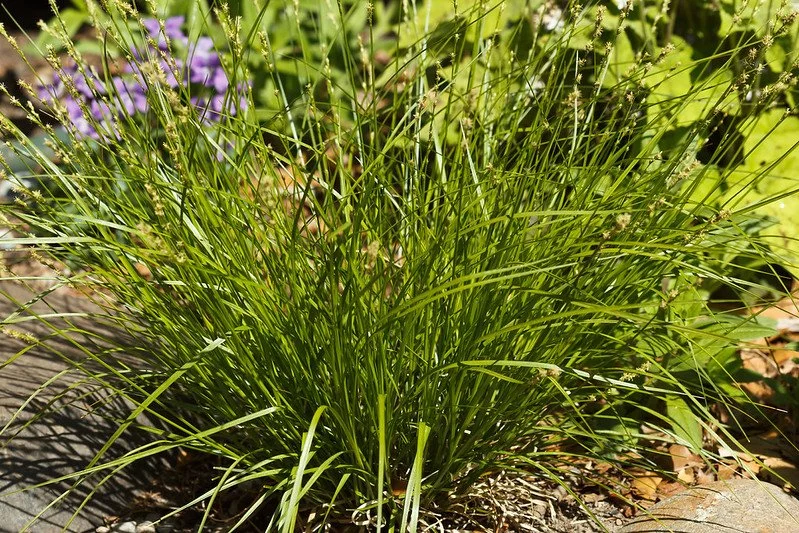
Appalachian sedge (Carex appalachica)
Like Eastern Narrowleaf Sedge, Appalachian Sedge is a clump-forming native perennial sedge that provides ample pollinator benefits. But it differs in that it has much finer-textured stems, which create a soft, sweeping appearance that undulates in the breeze. This low-maintenance sedge thrives in partial to full shade and prefers dry or well-drained soils. It’s a great groundcover choice for shaded gardens, woodland gardens, or dry borders.
Photo Credit: Tom Potterfield