7 Ways You Can Support Ohio Forests
Ohio forests span more than 8 million acres of our state, and approximately 84% of that forested land is privately owned. This means the health of our state’s forest ecosystems rests in the hands of homeowners and landowners.
Luckily, you don’t have to be an arborist to support forest ecosystems. When you take steps to protect woodlands’ wellbeing, you help sustain wildlife habitat, water quality, clean air, carbon storage, recreational opportunities, and our state’s natural beauty, among other benefits.
Here are 7 ways you can support Ohio forests.

Photo credit: Darshan Simha
Suburban and Urban Homeowners
Remove invasive species.
One of the most significant actions you can take on behalf of Ohio woodlands is to remove invasive species from your property, which will inhibit their spread across Ohio.
Common woodland invasives include bush honeysuckle, privet, multiflora rose, burning bush, and English ivy. Getting rid of them clears the way for native plants to take hold, which is vital for native wildlife and pollinators as well as ecosystem functioning.
At Our Land Organics, we offer invasive honeysuckle removal and replacement packages for exactly this purpose.
Install native plants.
Once you’ve eliminated invasive plants from your woodland, the next impactful action you can take is to reintroduce native plant species. These plants provide habitat and food sources for native pollinators and wildlife, who help disseminate the plants throughout area woodlands.
Even if you just have a small strip of woodland in your backyard, removing invasives and adding native plants can create a “habitat corridor” that supports pollinators and wildlife as they move between larger sections of forest.
Once you’ve bolstered your woodland with native plants, consider looking into certifying your habitat with the National Wildlife Federation or other organizations that promote suburban and urban wildlife habitats.
Plant an oak tree.
All trees provide ecological benefits in the form of carbon storage, erosion control, and shelter and habitat for birds, bats, and amphibians. But if you only have room in your yard to plant a single native tree species, oak trees will provide exceptional benefits.
Oaks are a keystone species that supports more than 500 species of caterpillars. These caterpillars are an essential food source for native birds and other wildlife.

Photo credit: Erik Drost
For Landowners with 10+ Acres
For landowners with 10 or more acres, the same principles as above apply. The most impactful actions you can take for our forests are to remove invasive plants and introduce more native plants, including oak trees.
In addition, consider these actions:
Request a visit from a State Forester.
You can contact the state to request a visit from a State Forester, who will walk your property, provide tips for managing your woodland sustainably, and might even be able to help secure funding for invasive plant removal on your property. Visit this resource from the Ohio Department of Natural Resources’ Division of Forestry to contact your district’s State Forester.
Commit to a sustainable Forest Management Plan (and get a tax reduction).
The Ohio Forest Tax Law (OFTL) empowers landowners with 10 or more contiguous acres of forest to apply for a 50% property tax reduction. To receive the reduction, you’ll need to commit to an approved Forest Management Plan designed to maintain your woodlands sustainably.
Similarly, the Family Forest Carbon Program (FFCP) provides landowners with more than 30 acres of woodlands with annual stipends to support sustainable forestry management.
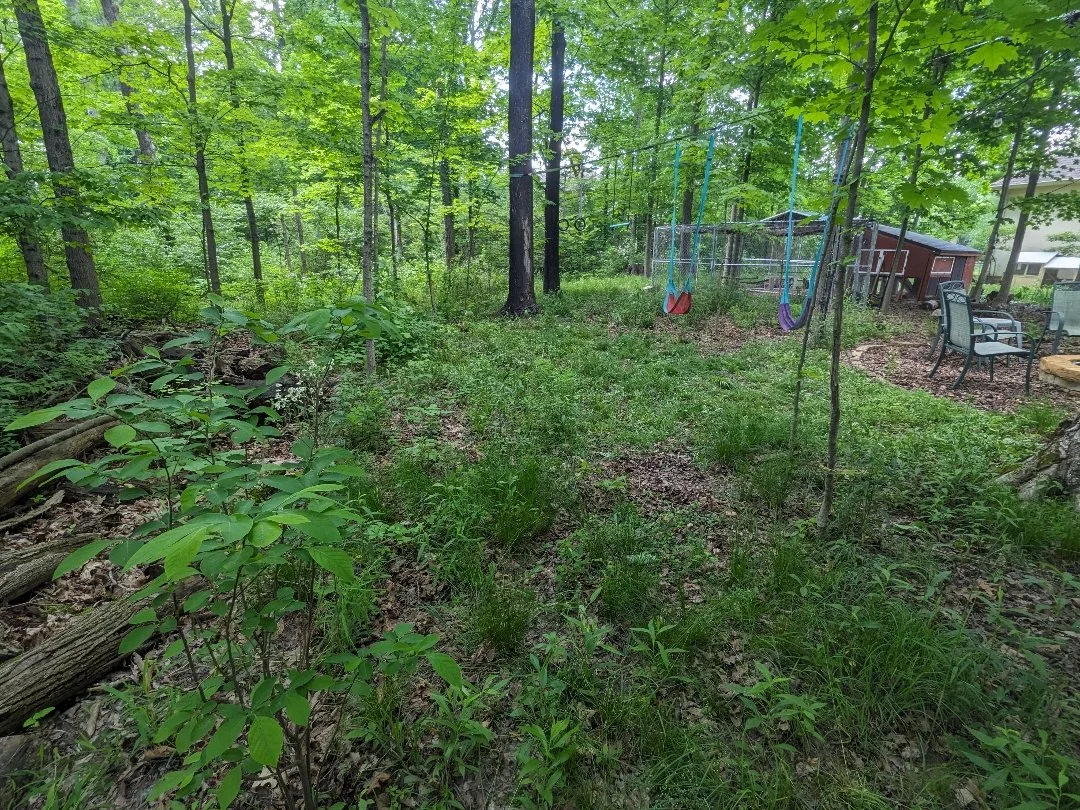
A restored backyard woodland filled with native plants (Our Land Organics client)