“Create Your Canvas”: Q&A with Rowan, OLO’s Assistant Landscape Designer
We’re very pleased to introduce one of the newest members of the Our Land Organics team!
Rowan Strippelhoff is our new Assistant Landscape Designer, bringing creativity and a passion for native plants to our ecological landscape design studio. Below, Rowan shares a bit about his approach to native landscape design and shares his enthusiasm for the tremendous value of native plants.

Rowan is Our Land Organics’ new Assistant Landscape Designer
What drew you to native landscaping?
First off, the native landscape community. The people that are part of the community are very welcoming, knowledgeable, and passionate about what they do. There is always something to learn from those around you.
I’m also drawn to making a difference in support of wildlife and the environment. And I love the aesthetics and functionality of a well-designed native landscape.
What is your background as a landscape designer?
I studied Horticulture and graduated with a bachelor of science and art from University of Cincinnati DAAP (College of Design, Architecture, Art, and Planning). Throughout my time in school, I learned from several landscape designers and completed landscape design projects. I’ve also had a general interest in science, art, and horticulture throughout my life.
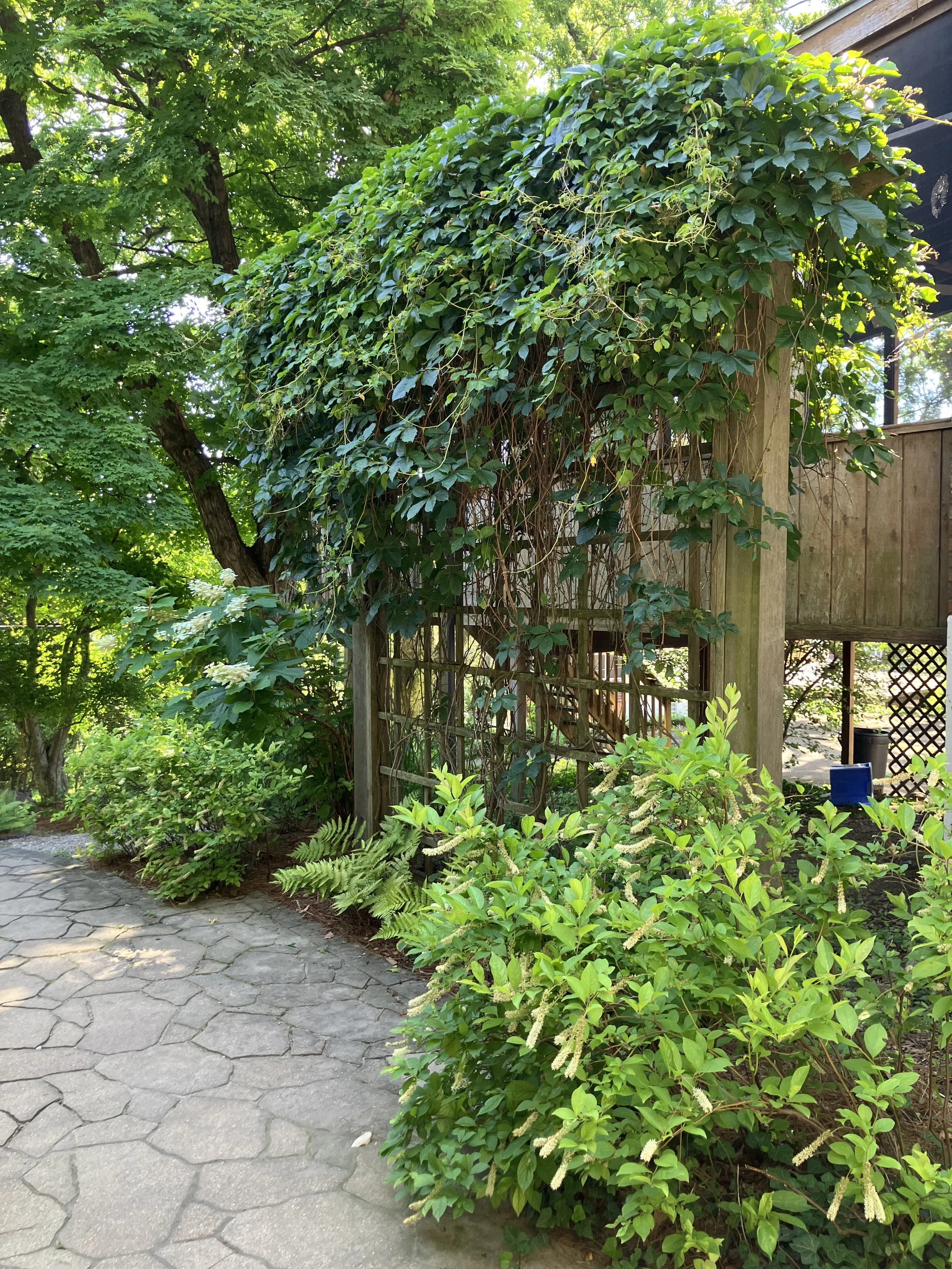
A wooden trellis supports native Virginia creeper, creating a “living wall” that offers privacy between close neighbors (Our Land Organics design & installation)
How would you describe your approach to native landscape design?
I approach every project with an open mind and always try to pick the best native plants for the job. For example, drought- and heat-tolerant prairie dropseed works perfectly in patio and driveway borders, while a wet-tolerant plant like Joe Pye weed is well-suited to a low area or rain garden.
I especially enjoy developing organic forms and creative hardscape elements that blend aesthetics, native plants, and function. An example would be a trellis system with native Virginia creeper that has the function of screening an unwanted view.
What’s one of your favorite native landscape design tips?
It's best to figure out what your goal for the landscape is. I find the planting plans come easiest with a well thought out plan for the landscape beds and hardscape. Create your canvas, then paint it with natives fit for the job at hand!
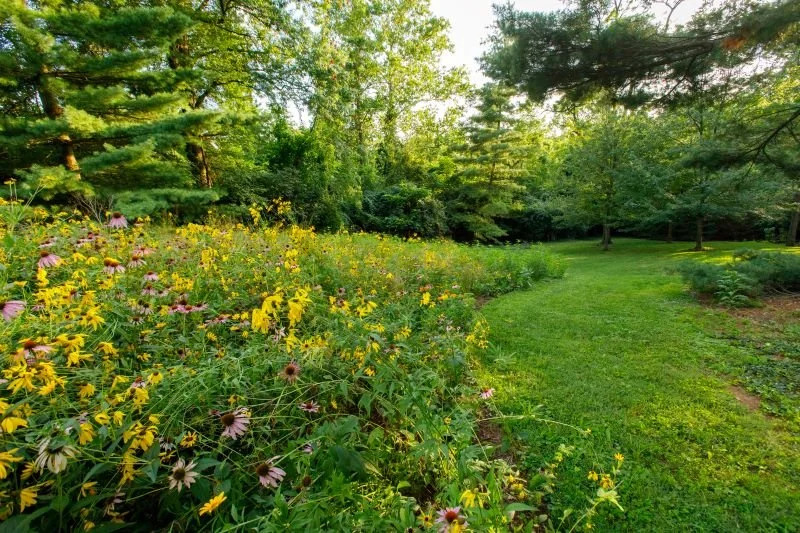
A native prairie provides a wealth of ecological and human benefits (Our Land Organics design & installation)
What’s something you’ve learned about native landscaping that delights you?
I learned how much enthusiasm there is from people about having a native landscape designed and installed. Native landscapes are becoming more and more popular as people learn how much they can do.
What are the benefits of native landscapes?
Here are some:
They support local ecosystems and wildlife
They have fewer maintenance requirements compared to conventional landscapes
They don’t rely on harmful chemical inputs like herbicides or pesticides
They offer great ornamental value
They benefit the homeowner by enhancing outdoor living spaces
They’re effective in water management and erosion control
They can replace lawns and eliminate the need to mow
What’s something you’ve learned about native landscaping and/or design that might surprise other people?
Fun Fact: Native oak trees can support 500 to 1,000 different species of moth and butterfly caterpillars. The simple choice between a non-native tree and a native oak can make a huge difference. Again, just think about how much a full native landscape can do.
What’s a common misconception about native landscaping that you’d like to clear up?
That native landscapes only fit one aesthetic. The reality is that we can create beautiful formal, natural, modern, and traditional landscapes with the right hardscape elements and native plants!
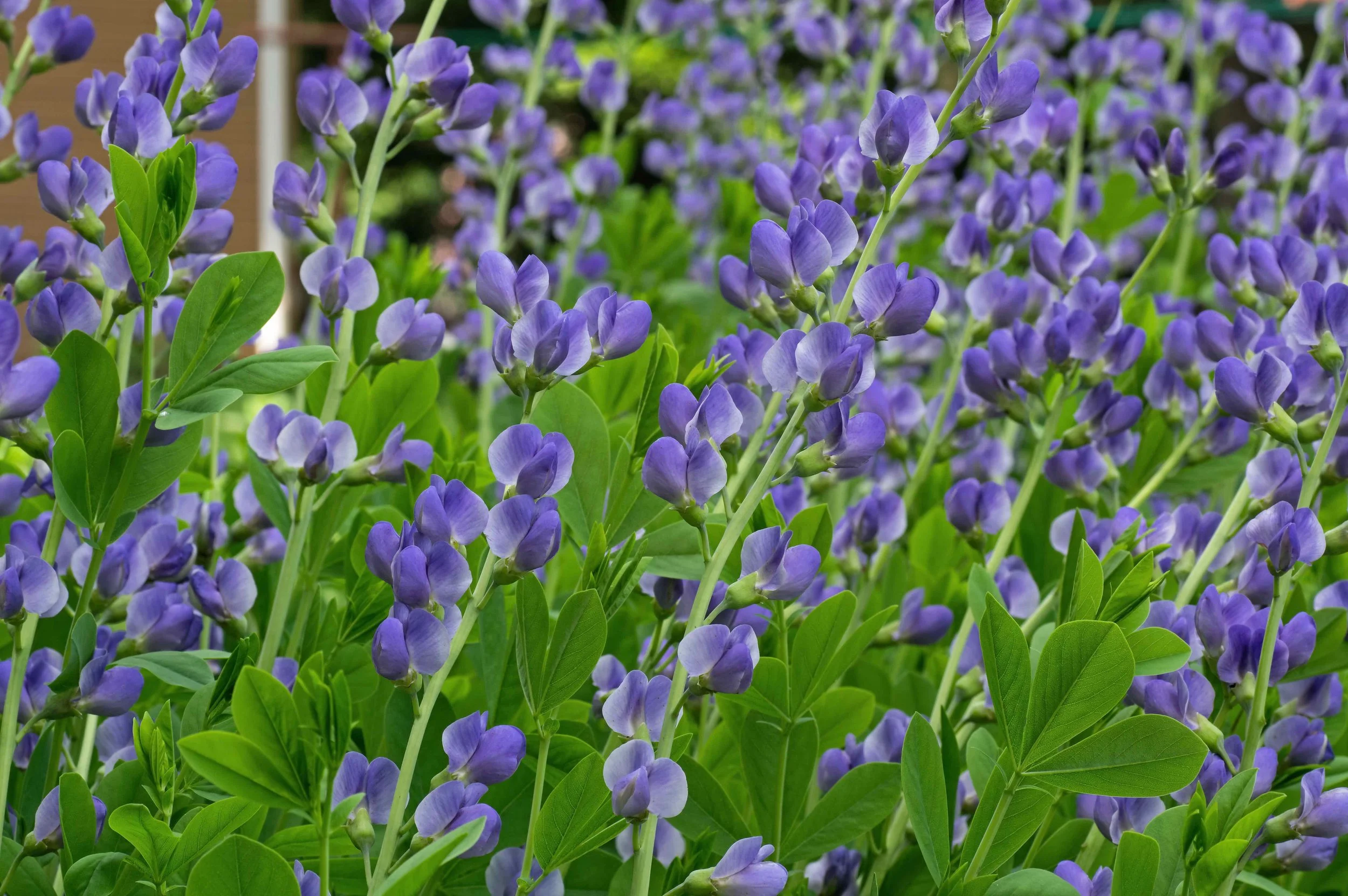
Baptisia australis, one of Rowan’s favorite native plants